-1.png?width=800&height=157&name=1-playwire-logo-primary-2021%20(1)-1.png)


Remember when advertising was as simple as putting car ads in car magazines? Those were the days – except they weren't really that simple, and they definitely weren't as effective as what we can do today. Contextual advertising has evolved from that basic concept into something far more sophisticated, even if some in the industry still treat it like it's 1995.
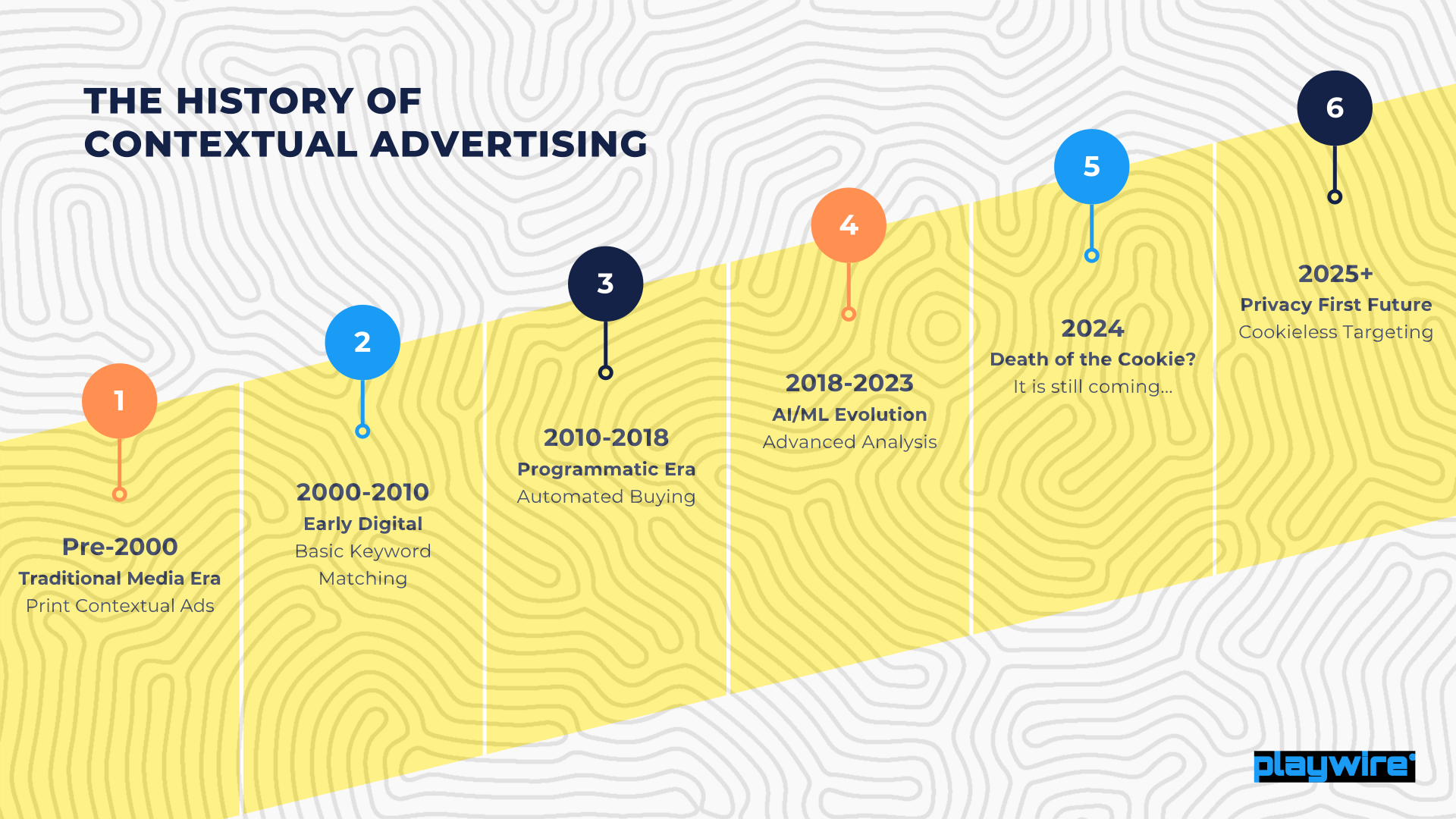
Let's address the privacy-shaped elephant in the room: yes, the eventual death of third-party cookies makes contextual targeting more interesting. But if that's the only reason you're here, you're missing the bigger picture. Smart advertisers and publishers are rediscovering that contextual advertising isn't just a backup plan – it's often a very effective way to reach engaged audiences, cookie apocalypse or not.
Here's what's fascinating: while everyone's been chasing relevant audience segments and behavioral targeting for the past decade, they've largely overlooked the power of simply putting the right contextual ad in front of someone while they're actively consuming relevant content. It turns out that reaching a self-identified travel enthusiast while they're reading about Fiji might actually be more valuable than targeting someone who looked at a flight booking site three weeks ago. Who knew?
But here's where things get tricky. While contextual advertising sounds simple in theory (just match ads to content, right?), doing it effectively at scale is anything but. Today's digital ecosystem is incredibly complex, with multiple players, competing technologies, and varying capabilities across the supply chain. Understanding how to navigate this landscape is crucial for both advertisers and publishers.
For advertisers, the challenge lies in finding the sweet spot between precision and scale. Yes, you could target only the most perfectly aligned content, but you might end up with a thimble-full of impressions. The art lies in building smart contextual strategies that maintain relevance while delivering meaningful campaign impact.
For publishers, the opportunity is clear but executing on it requires more than just having great content. You need to ensure your content is properly structured, your contextual signals are making it through the supply chain intact, and you're packaging your inventory in ways that attract premium advertising dollars.
What's often overlooked in these discussions is the value of direct publisher relationships. While programmatic contextual targeting has its place, there's something powerful about working directly with publishers who deeply understand their content and audience. It's the difference between algorithmic guesses and true contextual alignment.
The reality is that premium independent publishers – the ones creating deeply engaging content for passionate audiences – are getting squeezed in today's programmatic ecosystem. They're watching their previously healthy direct IO business evaporate into programmatic dimes for what used to be direct sales dollars. And somewhere between your DSP bid and that publisher's content, a conga line of middlemen each takes their cut.
But here's the good news: there's a better way. By understanding how contextual advertising really works in today's ecosystem – both its opportunities and limitations – advertisers and publishers can build more effective partnerships that deliver value for everyone involved. That's what this guide is about.
Whether you're an advertiser looking to improve campaign performance or a publisher seeking to maximize your revenue, you'll find actionable insights here. We're going to cut through the industry jargon and fluff marketers use to give you a clear understanding of what works, what doesn't, and how to make contextual advertising work harder for your business.
And yes, we'll talk about cookies and privacy and all that fun stuff – but more importantly, we'll show you how to build effective strategies for your contextual campaigns that deliver results today while preparing you for whatever tomorrow brings. Because at the end of the day, that's what really matters: creating an advertising campaign that works for everyone – advertisers, publishers, and most importantly, users.
Let's dive in.
Think of contextual advertising like matchmaking for content and ads – but instead of swiping right based on dating profiles, we're matching based on what people are actively reading, watching, or engaging with. Simple concept, complex execution.
What Contextual Advertising Actually Is (And Isn't)
At its most basic, contextual advertising means placing contextual ads that match the content users are currently consuming.
Gaming headset ads next to a review of the latest Call of Duty release? That's a contextual ad.
Travel insurance promotion alongside an article about planning trips to Europe? Also a contextual advertising example.
Showing ads for a new show next to a review about a similar show? You guessed it, that’s contextual as well.
Showing someone ads for shoes because they browsed a shoe site last week? Not contextual – that's behavioral advertising, and it's a whole different ball game.
But modern contextual advertising goes far beyond matching simple relevant keywords. Today's systems analyze content at a much deeper level, understanding themes, sentiment, and user intent. It's the difference between matching "Apple" ads to any content mentioning the word (hope you like fruit!) versus understanding whether the content is about technology, recipes, or agricultural trends.
How Modern Contextual Actually Works
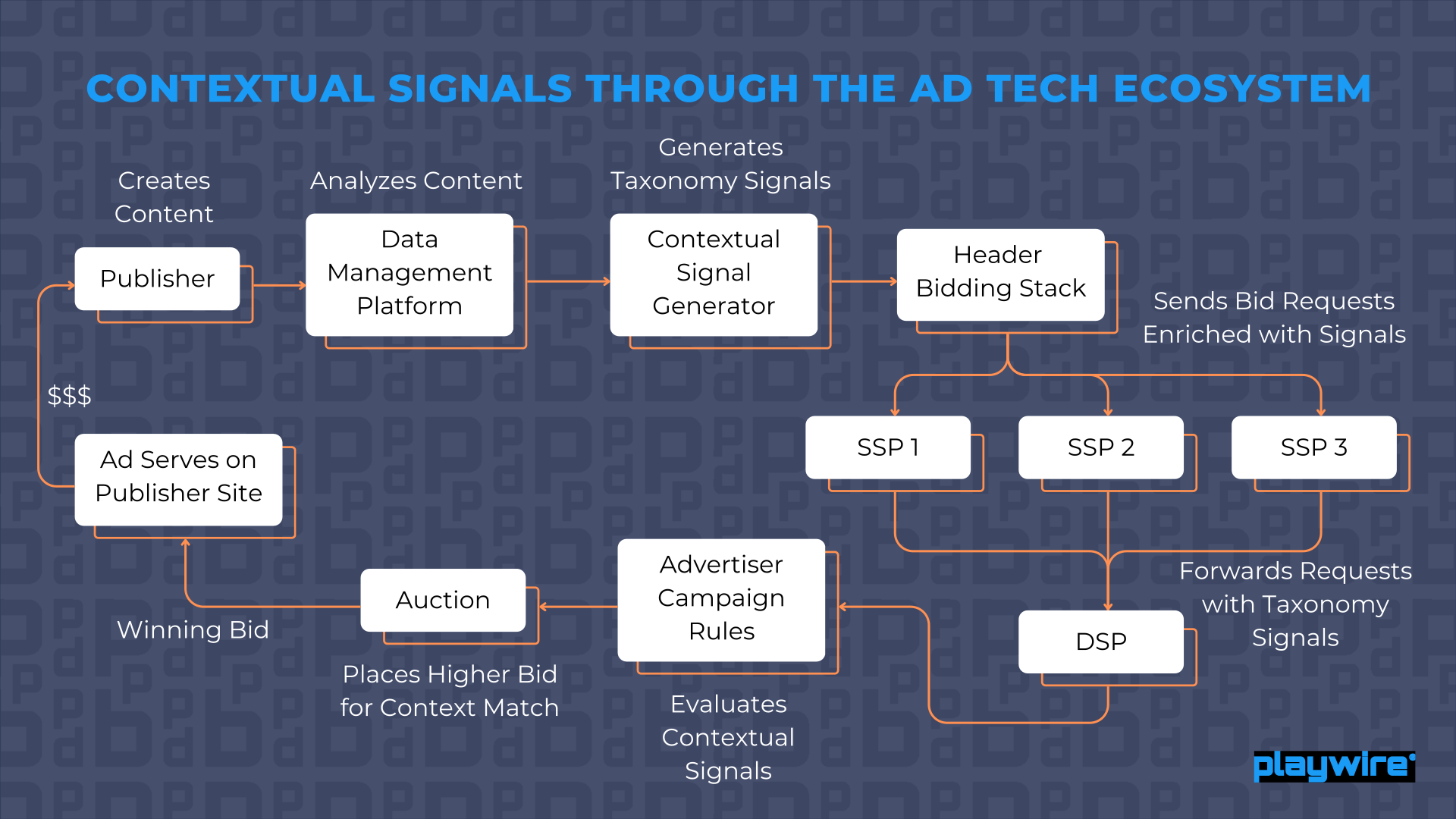
Let's pull back the curtain on how contextual advertising functions in today's programmatic ecosystem. It's a bit like a game of telephone, but with billions of data points and (hopefully) better accuracy.
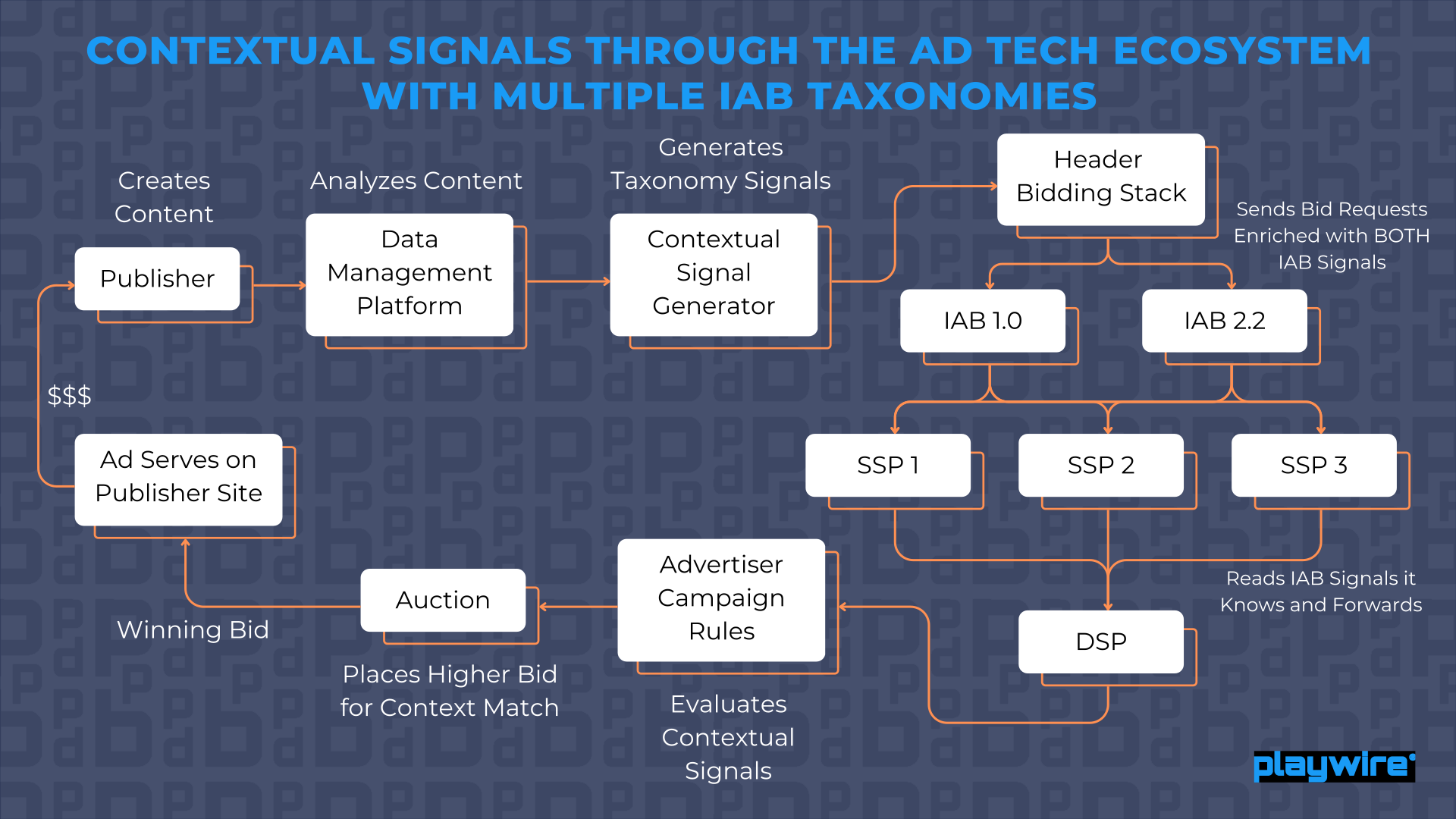
The process starts with publishers sending contextual signals through the bid stream to Supply Side Platforms (SSPs). These signals typically follow standardized taxonomies – think of them as universal languages that everyone in the ad tech ecosystem can understand. Currently, there are two main specs in use (IAB's 1.0 and 2.2), and smart publishers send both to ensure maximum compatibility.
These signals get passed along to Demand Side Platforms (DSPs), where advertisers can put them to use. But here's the catch – this system is only as good as its weakest link.
Those beautiful contextual signals are worthless if the players in the ecosystem aren't actively reading and acting on them. Some SSPs support both taxonomy specs, some haven't adopted the newer 2.2 spec, and others have deprecated the older 1.0 version.
Key Players in the Contextual Ecosystem
Before diving into strategy, let's map out who's who in the contextual advertising world. Because here's the thing – while contextual might seem like a straightforward matchmaking game between content and ads, there's actually a whole cast of characters involved in making it work. Understanding who these players are and what they actually do (versus what they claim to do in their pitch decks) is crucial for navigating the ecosystem effectively.
The contextual advertising landscape includes several types of players, each with distinct roles:
Publishers
Let's start with the foundation of contextual advertising: the publishers who create the content that makes contextual targeting possible in the first place.
- Create the content that forms the contextual environment
- Send contextual signals into the bid stream
- Can work directly with advertisers or through intermediaries
Without quality publisher content to work with, even the most sophisticated contextual targeting technology is just expensive plumbing with nothing flowing through it.
SSPs and Ad Exchanges
Think of Supply Side Platforms (SSPs) and exchanges as the interpreters of the ad tech world, translating publisher content signals into something buyers can actually use.
- Pass contextual signals from publishers to buyers
- Often create curated contextual packages
- Facilitate programmatic buying of contextual inventory
The effectiveness of your contextual targeting often depends heavily on how well these intermediaries handle and pass along those crucial contextual signals.
DSPs
Demand Side Platforms (DSPs) are where the rubber meets the road in programmatic contextual advertising, turning those contextual signals into actual ad placements.
- Receive and interpret contextual signals
- Enable buyers to target based on context
- Combine contextual with other targeting methods
A DSP is only as good as its ability to interpret and act on contextual signals, which is why choosing the right platform matters more than many advertisers realize.
Specialized Contextual Providers
Just when you thought the ad tech ecosystem couldn't get any more crowded, enter the specialized contextual providers promising to make sense of it all.
- Offer advanced content analysis and categorization
- Create custom contextual segments
- Provide additional contextual signals beyond standard taxonomies
While these specialists can add value in specific scenarios, be wary of solutions that promise to revolutionize contextual targeting without explaining exactly how they'll do it.
Common Misconceptions About Contextual
The ad tech industry has a talent for turning simple concepts into mysterious black boxes wrapped in buzzwords and jargon. Contextual advertising has suffered more than its fair share of this treatment. Let's cut through the noise and address some of the most persistent myths we keep hearing from both advertisers and publishers.
Because sometimes knowing what's not true is just as important as knowing what is. Let's bust a few myths while we're here:
Myth 1: "Contextual targeting is just a backup plan for when cookies go away."
Reality: Contextual often outperforms behavioral targeting, cookies or no cookies. It's about reaching people in the right mindset, not just tracking their past behavior.
Myth 2: "Contextual targeting limits scale too much."
Reality: While hyper-specific targeting can limit scale, smart contextual strategies balance precision with reach. It's not about targeting only perfect matches – it's about finding valuable contextual environments that align with your goals.
Myth 3: "All contextual targeting is created equal."
Reality: There's a world of difference between basic keyword matching and sophisticated contextual analysis. The technology and approach matter enormously.
The Technology That Makes It All Work
Under the hood of modern contextual advertising is a sophisticated tech stack that makes those old-school keyword matching systems look like stone tools. While you don't need to be a computer scientist to use contextual effectively, understanding the basic technology behind it helps you make smarter decisions about partners and platforms. Here's what's actually happening behind those fancy marketing buzzwords.
Modern contextual advertising relies on several key technologies:
- Natural Language Processing (NLP) for understanding content meaning and context
- Machine Learning algorithms for content categorization and classification
- Real-time analysis systems for immediate content understanding
- Standardized taxonomies for consistent categorization across the ecosystem
- Signal processing systems for managing contextual data in the bid stream
This technological foundation enables contextual targeting that's far more sophisticated than traditional keyword matching, allowing for nuanced understanding of content and context at scale.
Understanding these fundamentals is crucial for both advertisers and publishers. Without knowing how the system works, you can't effectively leverage it – or spot when someone's trying to sell you snake oil dressed up as "AI-powered contextual intelligence" (yes, we've seen those pitch decks too).
If you've been in digital advertising for more than five minutes, you've probably heard the holy grail described as "reaching the right person, at the right time, with the right message." Contextual advertising isn't just one piece of that puzzle – when done right, it can help you nail all three.
The Value Proposition
Think of digital advertising targeting like a pyramid. At the very top, you have the dream scenario: reaching your exact target audience while they're consuming perfectly relevant content. But here's where reality kicks in – that level of precision usually comes with severe scale limitations.
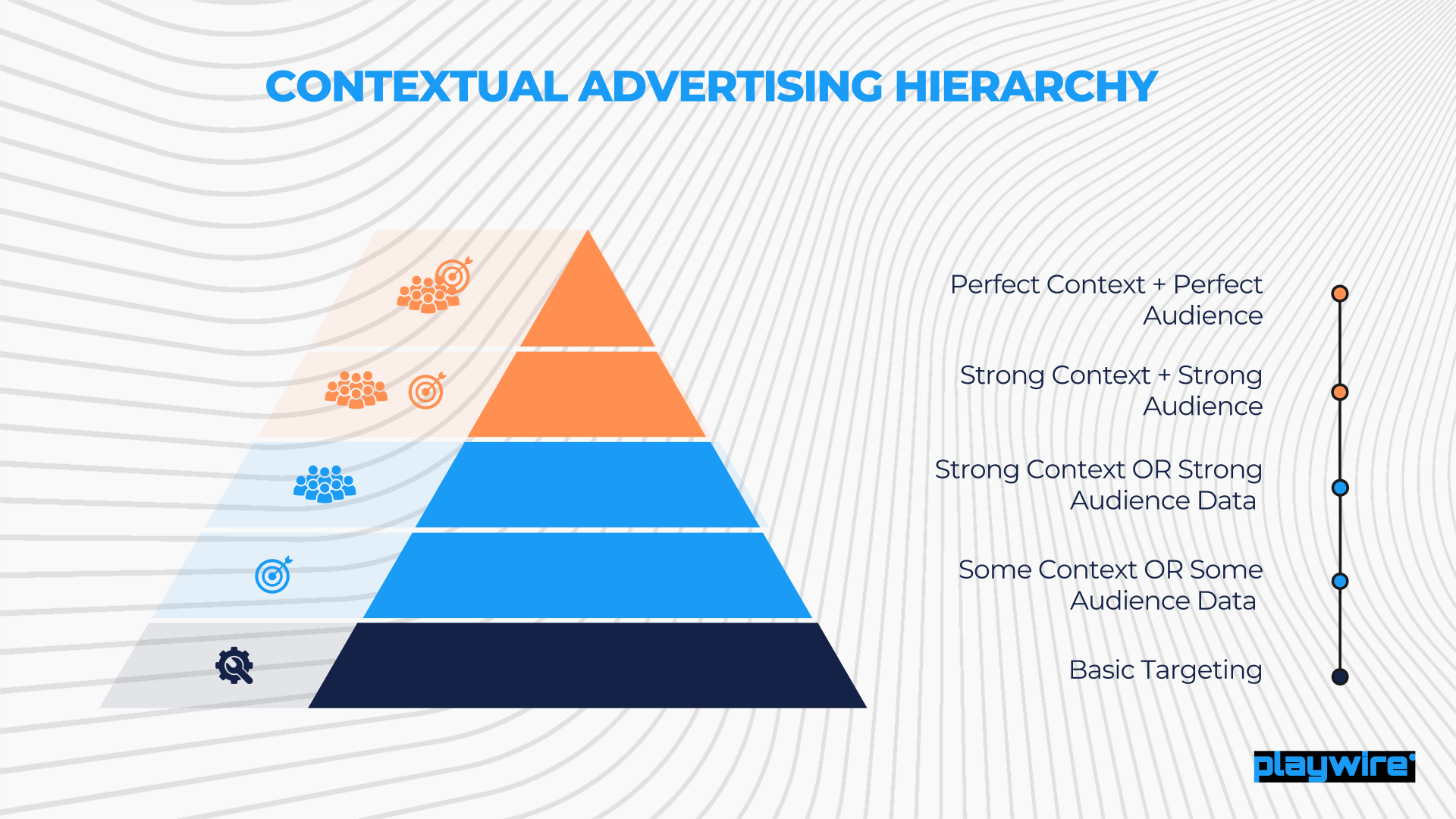
The key is finding the right balance between precision and scale. While it might sound great to only show your ads alongside exactly perfect content matches, you'd probably like to hit your impression goals sometime this century. Smart advertisers understand that contextual targeting works best as part of a layered strategy.
Consider this: someone reading about travel destinations in Fiji is probably more receptive to travel-related ads than someone who just happens to have visited travel sites in the past. Context isn't just about relevance – it's about mindset and intent. That's why contextual targeting often delivers engagement rates that make behavioral targeting look like a rounding error.
Strategic Implementation
Let's get practical about how to actually make contextual advertising work for your campaigns. The first decision you'll need to make is whether to pursue direct publisher relationships or rely on programmatic contextual targeting – or more likely, how to balance both.
Direct vs. Programmatic Approaches
Here's the truth about programmatic contextual targeting that most vendors won't tell you: while it's great for scale, you're often getting a simplified version of context. When you work directly with publishers (or through partners with direct publisher relationships), you get access to deeper contextual alignment and custom opportunities that programmatic just can't match.
Think of it this way: if you're a movie studio wanting to reach entertainment fans, would you rather trust a contextual algorithm scanning page content, or work directly with entertainment publishers who know their audience inside and out?
Building Your Contextual Strategy: A Comprehensive Approach
Think of your advertising strategy like an onion (yes, we're making a Shrek reference - deal with it). You want to build it in layers, starting with your highest-performing, most precisely targeted impressions and working your way out to achieve necessary scale.
Strategy Layer | Budget Allocation | Expected Outcome | Typical CPMs |
Direct Publisher Partnerships | 20-30% | Highest performance, deepest alignment | Premium ($$$$) |
Curated Contextual Packages | 30-40% | Balance of performance and reach | High ($$$) |
Programmatic Contextual | 20-30% | Maximum scale with relevance | Moderate ($$) |
Audience Extension | 10-20% | Reach expansion | Variable ($-$$$) |
Here's how to structure your approach:
Layer 1: Direct Publisher Partnerships
Think of direct publisher partnerships as your premium contextual foundation. This is where you get the deepest level of contextual alignment, the most control over placement, and access to custom content opportunities that programmatic just can't match.
While this layer typically comes with higher CPMs, it also delivers the kind of engagement and performance metrics that’ll make you jump for joy. Plus, working directly with publishers (or through partners with direct publisher relationships) means more of your ad spend actually makes it to the people creating the content your audience cares about.
Start with publishers who have the most relevant content and engaged audiences for your brand:
- Work directly with key publishers in your vertical
- Focus on premium environments with proven audience engagement
- Explore custom content opportunities
- Leverage publisher first-party data
- Build flexible deals that can include both standard and high-impact ad units
Expected outcome: Highest CPMs but also highest performance; typically your most premium inventory with the deepest contextual alignment
Layer 2: Curated Contextual Packages
Once you've established your premium foundation, it's time to add scale without sacrificing too much precision. Curated contextual packages thread this needle by bundling similar premium inventory across multiple publishers.
Think of it as getting the benefits of direct publisher relationships but with the scale of programmatic. These packages are typically pre-vetted, brand-safe, and organized around specific themes or verticals, making them an efficient way to expand your contextual footprint.
Work with partners who can aggregate premium publisher inventory:
- Partner with sales houses or SSPs that have strong publisher relationships
- Look for pre-packaged contextual segments that align with your brand
- Focus on transparent inventory sources
- Maintain brand safety while gaining scale
- Consider custom packages for specific campaign needs
Expected outcome: Good balance of performance and reach; ability to maintain premium positioning while expanding scale
Layer 3: Programmatic Contextual
Now we're moving into pure scale territory. Programmatic contextual lets you cast a wider net while still maintaining basic contextual relevance through bidstream signals. While you might not get the same deep alignment as direct partnerships or curated packages, you gain the ability to reach much larger audiences efficiently.
This layer is all about finding the sweet spot between reach and relevance – you're not just spraying and praying, but you're also not limiting yourself to perfect matches only.
Use contextual signals in the bidstream to expand reach while maintaining relevance:
- Implement IAB category targeting through your DSP
- Start broad and narrow based on performance
- Test different contextual providers' segments
- Monitor site lists for quality
- Set appropriate floor prices for different contextual categories
Expected outcome: Maximum scale while maintaining contextual relevance; typically lower CPMs but higher volume
Layer 4: Audience Extension
Here's where we tie everything together. Audience extension takes the valuable users you've found in contextual environments and helps you maintain connections with them across other media.
Think of it as the contextual multiplier effect – you've found these users in relevant environments, now you can continue the conversation across their broader digital journey. This layer helps solve the scale challenge while maintaining the quality of your targeting.
Take the audiences you've found in contextual environments and continue reaching them:
- Retarget users who've engaged with your ads in contextual environments
- Build lookalike audiences based on contextual performance
- Use first-party data from publisher partnerships
- Layer in behavioral targeting for additional scale
- Test different audience expansion strategies
Expected outcome: Maintains campaign reach while leveraging learnings from contextual targeting
Approach | Pros | Cons | Best For |
Direct Publisher Partnerships | - Deepest contextual alignment - Custom content opportunities - Direct publisher relationships | - Higher costs - Limited scale - More management required | Premium brand campaigns, custom content initiatives |
Curated Packages | - Pre-vetted inventory - Good balance of quality/scale - Simplified buying | - Less control - Higher minimums - Less customization | Mid-size to large campaigns needing quality at scale |
Programmatic Contextual | - Maximum scale - Automated buying - Flexible targeting | - Less precise targeting - Variable quality - Limited customization | Reach-focused campaigns, testing new segments |
Keyword-Based | - Simple to implement - Highly specific - Easy to understand | - Can miss context - Limited sophistication - Scale challenges | Specific product campaigns, niche targeting |
Implementation Tips
Theory is great, but execution is everything. These implementation tips come from years of watching advertisers succeed (and occasionally fail) at building effective contextual strategies. We've distilled the key lessons learned into actionable steps that will help you avoid the common pitfalls and accelerate your path to success.
Consider this your contextual advertising cheat sheet.
1. Start Small and Scale Up
- Begin with a few key direct publisher relationships
- Test different contextual packages before scaling
- Monitor performance metrics closely
- Expand budget allocation based on results
2. Balance Your Budget
- Allocate 20-30% to direct publisher partnerships
- Invest 30-40% in curated contextual packages
- Use 20-30% for programmatic contextual
- Reserve 10-20% for audience extension
3. Optimization Strategy
- Track performance by layer and publisher
- Adjust budget allocation based on results
- Test different contextual segments
- Optimize toward your key performance indicators
4. Quality Control
- Regularly review site lists
- Monitor brand safety
- Check viewability by publisher
- Verify contextual alignment
5. Measurement Framework
For each layer, track:
- Cost per engagement
- Viewability rates
- Brand safety metrics
- Conversion attribution
- Return on ad spend
Common Strategic Pitfalls to Avoid
Let's be honest – we've seen just about every way contextual advertising can go wrong. While some mistakes you'll need to make yourself (learning experiences, right?), others you can easily avoid by learning from those who've gone before you.
These pitfalls represent the most common – and most expensive – mistakes we see advertisers make when implementing contextual strategies. Consider this section your insurance policy against wasted ad spend.
- The Scale Trap: Don't sacrifice quality for scale too quickly. Build your foundation with premium inventory first.
- The Set-It-And-Forget-It Mistake: Contextual requires ongoing optimization and refinement.
- The All-Or-Nothing Approach: Don't put all your budget in one layer. Test and learn across all layers.
- The Price-Only Focus: Remember that higher CPMs in premium contextual environments often deliver better overall campaign performance.
By following this layered approach, you can build a contextual strategy that delivers both precision and scale. The key is to maintain flexibility and continuously optimize based on performance data. Start with your most valuable contextual opportunities and expand methodically while maintaining clear success metrics for each layer of your strategy.
Integration with Other Targeting Methods
One of the biggest mistakes advertisers make is treating contextual targeting as an either/or proposition. The reality is that contextual works best when integrated with other targeting methods as part of a comprehensive strategy.
Consider using:
- Contextual targeting for high-impact upper-funnel placements
- Audience targeting for reach and frequency
- Behavioral targeting for lower-funnel conversion
- Custom content opportunities for maximum relevance
Measuring Success
Like any advertising strategy, contextual needs proper measurement and optimization. However, be careful about applying the same metrics you use for other targeting methods without consideration for how contextual is different.
Key Metrics to Watch
- Engagement rates (often higher for contextually relevant placements)
- Viewability (context often drives better viewability)
- Brand lift (particularly important for upper-funnel campaigns)
- Conversion attribution (may require different attribution windows)
Common Pitfalls to Avoid
- Over-segmentation leading to scale problems
- Ignoring the value of premium publishing environments
- Treating all contextual targeting as equal
- Focusing too narrowly on short-term metrics
Remember: the goal isn't just to find relevant content – it's to find valuable advertising opportunities that drive real business results.
The bottom line? Contextual advertising isn't just another targeting option to check off your media plan. When implemented strategically, it's a powerful tool for connecting with audiences in environments where they're most receptive to your message.
The key is understanding how to balance precision with scale, direct with programmatic, and contextual with other targeting methods to create campaigns that actually deliver on those "right person, right time, right message" promises we all love to make.
Let's cut through the marketing fluff and talk about what really matters: maximizing the money you make from contextual advertising. Because while everyone's talking about privacy regulations and the death of cookies, smart publishers are already building sustainable revenue streams through strategic contextual optimization.
Technical Foundation
Before you can start commanding premium CPMs for your contextual inventory, you need to get your technical house in order. Think of it as building a house – you can have the most beautiful design in the world, but if your foundation is shaky, the whole thing could collapse.
Content Organization and Taxonomy
First things first: your content needs to be properly organized and categorized. This isn't just about making your site look pretty – it's about sending clear signals to advertisers about what your content is actually about.
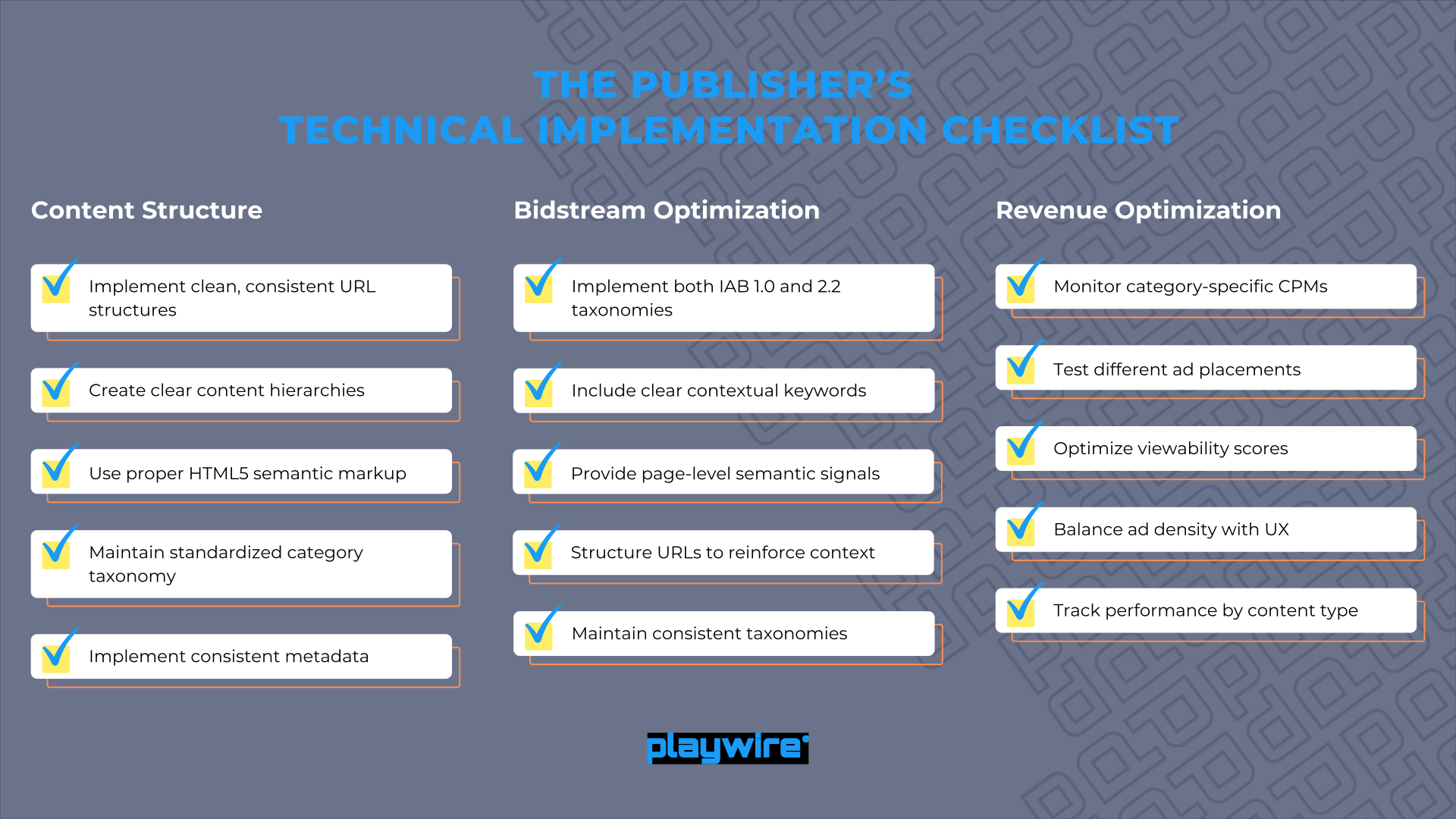
Key technical requirements include:
- Clean, consistent URL structures
- Clear content hierarchies
- Proper HTML5 semantic markup
- Standardized category taxonomy (aligned with IAB standards)
- Consistent metadata implementation
Bidstream Signals and Optimization
Your bids are only as good as the contextual signals you send with them. Here's what you need to know about optimizing your bidstream signals:
- Implement both IAB 1.0 and 2.2 taxonomies (different SSPs use different versions)
- Include clear contextual keywords and metadata
- Provide page-level semantic signals
- Maintain consistent taxonomies across your inventory
- Structure URLs to reinforce contextual signals
Remember: Programmatic buyers can only bid on what they can see. The more structured and clear your contextual signals are in the bidstream, the more likely you are to attract premium CPMs.
Content Strategy
Creating content that attracts premium contextual advertising isn't just about writing what users want to read – it's about building valuable advertising environments. Here's how to align your content strategy with advertising goals:
Content Development
While creating great content for your users should always be the primary goal, smart publishers understand how to align their content strategy with valuable advertising opportunities.
- Create content clusters around valuable advertiser categories
- Develop depth in profitable verticals
- Maintain consistent category taxonomy
- Keep content fresh and updated
- Focus on quality over quantity
Success requires finding the sweet spot between editorial integrity, user engagement, and advertising value – when done right, these goals complement rather than compete with each other.
Scale Considerations
Here's a truth that most ad tech vendors won't tell you: scale matters enormously in contextual advertising. Individual sites often struggle to demonstrate enough scale in specific contextual categories to attract major advertisers. This is where being part of a larger network can make a huge difference.
Revenue Optimization
Now for what you really care about: making more money. Here's how to optimize your contextual revenue:
CPM Optimization
Getting contextual advertising right technically is only half the battle – you need to consistently optimize your setup to maximize revenue.
- Monitor category-specific CPMs
- Test different ad placements
- Optimize viewability scores
- Balance ad density with user experience
- Track performance by content type
CPM optimization isn't a one-time task but an ongoing process of testing, measuring, and refining to ensure you're extracting maximum value from every impression.
Direct Sales Opportunities
Direct deals often command premium CPMs, and strong contextual alignment makes your inventory more attractive to direct advertisers. Consider:
- Building custom content packages
- Creating category-specific offerings
- Developing high-impact placement options
- Offering content creation capabilities
- Providing detailed performance reporting
Package Creation
Smart packaging of your inventory can significantly impact revenue. Consider creating:
- Vertical-specific packages
- Custom contextual bundles
- High-performance segments
- Premium content packages
- Seasonal offerings
Remember: The goal isn't just to sell ads – it's to create valuable advertising opportunities that command premium rates while maintaining a quality user experience.
The Scale Challenge
Let's be brutally honest about something most publishers don't want to hear: it's incredibly difficult for individual sites to achieve the scale necessary to attract premium contextual advertising dollars. This is where being part of a larger network becomes crucial.
By aggregating contextually-relevant inventory across multiple premium publishers, networks can create powerful curated deals that individual publishers could never achieve alone. Think gaming content across hundreds of gaming sites, or entertainment coverage across multiple media properties.
This network effect means better CPMs, higher fill rates, and access to premium brand dollars that typically bypass smaller publishers. Major brands want contextual relevance, but they also need scale. A standalone gaming site might have perfect contextual alignment for a new game launch, but not enough inventory to satisfy a major campaign's needs.
The bottom line? Success in contextual advertising isn't just about having great content or perfect technical implementation – it's about finding ways to achieve meaningful scale while maintaining quality. Whether that's through partnerships, networks, or other strategic approaches, solving the scale challenge is crucial for maximizing contextual revenue.
Remember: The key to successful contextual monetization is balancing all these elements – technical foundation, content strategy, and revenue optimization – while finding ways to achieve necessary scale. Focus on getting these fundamentals right, and you'll be well-positioned to capitalize on the growing importance of contextual advertising.
Ready for AdTech that Works for You?
Quality content deserves quality monetization. Your audience deserves respect. Your revenue deserves transparency.
Start Building Better RevenueWant to see the proof first?
Read Publisher Success Stories