
-1.png?width=800&height=157&name=1-playwire-logo-primary-2021%20(1)-1.png)


April 23, 2026

Editorial Policy
All of our content is generated by subject matter experts with years of ad tech experience and structured by writers and educators for ease of use and digestibility. Learn more about our rigorous interview, content production and review process here.

What Lifestyle Publishers Actually Need From an Ad Network
Lifestyle content lives or dies by visual presentation. Your readers came for the recipe, the travel itinerary, the home tour, or the workout routine. They didn't come for a takeover ad that breaks your hero image grid.
That's the core tension. Ad networks built for high-volume utility sites or news properties often optimize for impressions in ways that wreck the aesthetic standards lifestyle publishers spent years building. The best ad networks for lifestyle publishers solve for revenue and design integrity at the same time, which means the technical evaluation needs to go deeper than CPM averages. For a broader view of how this plays out across adjacent categories, our complete guide to ad monetization for lifestyle, health, and travel publishers breaks down the full strategic picture.
The criteria that actually matter for this vertical include header bidding implementation quality, demand partner relevance to your category, ad format flexibility, page speed impact, and access to brands that already advertise in lifestyle media. We'll walk through each one with the technical specificity these decisions deserve.

Header Bidding Architecture: Where the Real Money Lives
Header bidding is the auction mechanism that lets multiple demand sources bid simultaneously on your inventory before the ad server makes a call. For lifestyle publishers, the architecture of that header bidding setup determines a meaningful chunk of your revenue ceiling.
Most ad networks claim header bidding capability. Far fewer offer the kind of unified client-side and server-side implementation that actually maximizes auction pressure without tanking page speed. The difference shows up in your monthly statement. It's a big part of why so many lifestyle publishers are leaving AdSense for more sophisticated monetization stacks.
Here's how the major architectural approaches compare across the criteria that matter for lifestyle inventory.
Server-side header bidding moves the auction off the user's browser and onto cloud infrastructure, which reduces page weight without sacrificing auction participants. For lifestyle sites loaded with high-resolution imagery, that latency reduction translates directly into better Core Web Vitals scores and higher organic rankings.
Playwire's RAMP platform operates header bidding on both client and server sides, manages wrapper configuration as part of the managed service, and applies AI-driven price floor optimization across more than 1.2M+ price floor rules per website. That kind of automation isn't optional at scale anymore.
Demand Partner Depth and Vertical Relevance
Demand partners are the SSPs, DSPs, and ad networks competing in your auction. Counting them is easy. Evaluating whether they actually want your inventory at premium rates is harder, and it's where lifestyle publishers get burned by generic networks. News publishers face a similar evaluation challenge, and our technical breakdown of the best ad networks for news publishers covers a parallel framework worth comparing.
A travel publisher needs demand from airlines, hotels, booking platforms, and tourism boards. A home and DIY site needs demand from home improvement retailers, furniture brands, and appliance manufacturers. A wellness publisher needs demand from supplements, fitness brands, and health-adjacent CPG. The right network has those buyer relationships locked in. Health-focused sites in particular should review our analysis of the best ad monetization platforms for health content creators to see how vertical alignment changes the demand mix.
The technical question to ask any prospective partner is straightforward. Which DSPs are actively bidding on lifestyle inventory through your platform, and what's the bid density per impression in this vertical? If the answer is vague, that's your answer.
Playwire maintains direct relationships with brands like Hulu, McDonald's, Subway, American Eagle, and Nissan, alongside thousands of exclusive premium publishers and 250+ first-party data segments. That demand mix is engineered for premium brand spend, which is exactly what lifestyle inventory should command.

Ad Formats That Work With Lifestyle Design
Ad format selection is where the design integrity question gets real. Standard IAB display units placed in standard locations might pay the bills, but they rarely capture the value lifestyle inventory should command. The best ad networks for lifestyle publishers offer format flexibility that respects your visual standards.
The format mix that performs best in lifestyle publishing combines standard display, dynamically injected in-content ads, outstream video that monetizes text content, and high-impact creative formats reserved for premium campaigns. Each one needs to integrate cleanly with your existing template and content flow. Video deserves its own evaluation, and our deep dive on everything there is to know about video ads for web and app publishers covers the format decisions that drive the biggest CPM lift.
Network capabilities in this area vary dramatically, and the differences directly affect your revenue per session. App-side properties or hybrid web-and-app publishers should also review the complete guide to using rewarded video ads on web, app, and more, since rewarded inventory often outperforms display by significant multiples when the implementation is clean.
Playwire's Flex Suite includes high-impact formats that deliver 90%+ viewability and video placements driving 4x higher CPMs than traditional units. For lifestyle publishers running seasonal content like holiday gift guides or summer travel features, the ability to layer in high-impact formats during peak demand windows is where significant revenue lift happens. If you're scoping a video partner specifically, our roundup of the top video ad networks for publishers walks through the evaluation criteria.
Page Speed and Core Web Vitals: The Hidden Revenue Driver
Lifestyle publishers live and die by organic search traffic. Pinterest, Google Discover, and standard search send the vast majority of sessions to most lifestyle sites, and Google's Core Web Vitals directly influence how those algorithms treat your content.
Bad ad code tanks Largest Contentful Paint, Cumulative Layout Shift, and Interaction to Next Paint. When that happens, your organic rankings slip, your traffic drops, and your revenue follows. The math is brutal, and it's why page speed isn't a secondary concern for lifestyle publishers. It's a primary revenue driver. Add to that the emerging impact of AI crawlers on lifestyle publisher traffic, and the case for protecting every millisecond of load time gets even sharper.
The technical capabilities that protect page speed include asynchronous ad loading, intelligent lazy loading, server-side bidding to reduce browser overhead, and content-first rendering that lets your hero images and copy load before ad slots fire. Networks that don't prioritize these capabilities will cost you organic traffic, which costs you revenue downstream.
Recurrent ran extensive head-to-head tests between four top ad monetization providers and found that Playwire delivered 500ms+ faster page speed and 17% higher revenue than the alternatives. That kind of measurable performance difference is exactly what lifestyle publishers should demand during evaluation.

Direct Sales and Vertical Brand Access
Programmatic demand pays the baseline, but direct sales is where premium CPMs come from. The best ad networks for lifestyle publishers either operate their own direct sales operation or provide preferred access to brands actively spending in your category.
Direct sales relationships unlock several revenue mechanics that pure programmatic can't match. They include programmatic guaranteed deals, private marketplaces with negotiated floors, custom content sponsorships, and high-impact takeover campaigns reserved for select inventory. Each one commands meaningful CPM premiums over open auction rates.
Lifestyle publishers should evaluate direct sales capability across these dimensions:
- Active sales team: Does the network have salespeople actively pitching your vertical to brand advertisers, or are they relying entirely on programmatic demand?
- Brand relationships: Which lifestyle and adjacent brand categories does the network already have advertising relationships with, and what's the typical deal structure?
- PMP and PG access: Can the network execute programmatic guaranteed deals and private marketplaces that route premium demand to your inventory?
- Custom activations: Does the network's creative team produce custom branded experiences, or are you limited to standard IAB formats?
- Revenue share transparency: What percentage of direct sales revenue actually reaches your account, and is that fee structure clearly disclosed?
Muscle & Fitness made the leap from print to digital and built a partnership where Playwire handles programmatic while their internal sales team runs direct campaigns. Programmatic now drives 60-70% of revenue without disrupting their direct sales operation, as detailed in the Muscle & Fitness case study. That kind of integration is what mature lifestyle publishers should be looking for.
Analytics, Reporting, and Operational Reality
The operational side of an ad network relationship is where promises meet reality. Real-time analytics, accurate reporting, and responsive support separate true partners from vendors who disappear after the contract is signed.
Lifestyle publishers running lean teams cannot afford 48-hour reporting delays or month-end revenue surprises tied to invalid traffic deductions. The best networks provide real-time performance data, page-level revenue analytics, accurate revenue projections, and dedicated account management that responds in hours rather than days. Travel publishers in particular have started leaning into AI-powered ad optimization to push beyond the buzzwords and into measurable yield improvements, and the same operational discipline applies across the lifestyle category.
The Playwire RAMP dashboard delivers real-time data across performance, page-level revenue, and content-level analytics, with custom reporting available via API. Combined with dedicated partner success managers and technical solutions engineers, the operational model is built for lifestyle publishers who need expertise on call without building an internal ad ops team.
Frequently Asked Questions
What makes an ad network "best" for lifestyle publishers specifically?
The best ad networks for lifestyle publishers combine vertical-specific demand relationships with page speed optimization that protects organic search traffic. Lifestyle inventory commands premium CPMs from travel, beauty, home, and wellness brands, but only when the network has direct relationships with those advertisers and an architecture that doesn't tank Core Web Vitals.
How does header bidding affect lifestyle publisher revenue?
Header bidding creates real-time competition among multiple demand sources before the ad server call, typically increasing CPMs by 20-50% over traditional waterfall setups. For lifestyle publishers, server-side header bidding is especially valuable because it reduces browser overhead on image-heavy pages, protecting page speed while maximizing auction pressure.
Why is page speed so critical for lifestyle ad networks?
Lifestyle publishers depend heavily on organic search and social traffic from Pinterest, Google Discover, and search engines. Slow ad code damages Core Web Vitals scores, which directly affects organic rankings. A faster ad implementation protects traffic, and traffic protects revenue. It's a single connected system.
Can lifestyle publishers keep their direct sales team and use an ad network?
Yes, the best ad networks for lifestyle publishers integrate cleanly with internal direct sales operations rather than competing for inventory. Muscle & Fitness, for example, runs internal direct sales while Playwire handles programmatic, with both teams working through coordinated prioritization rather than fighting over impressions.
Are rewarded video ads worth implementing on lifestyle sites?
Rewarded video can drive significant incremental revenue on lifestyle properties when implemented thoughtfully. Our breakdown of rewarded video ads best practices walks through placement, frequency, and value-exchange decisions that determine whether the format adds revenue or annoys readers.
Why Playwire Is the Right Fit for Lifestyle Publishers
Lifestyle publishers need an ad partner that treats design integrity, page speed, and brand access as primary requirements rather than nice-to-haves. Playwire's full-stack platform consolidates header bidding, ad serving, video, identity solutions, and direct sales into a single integration that respects the aesthetic standards your audience expects.
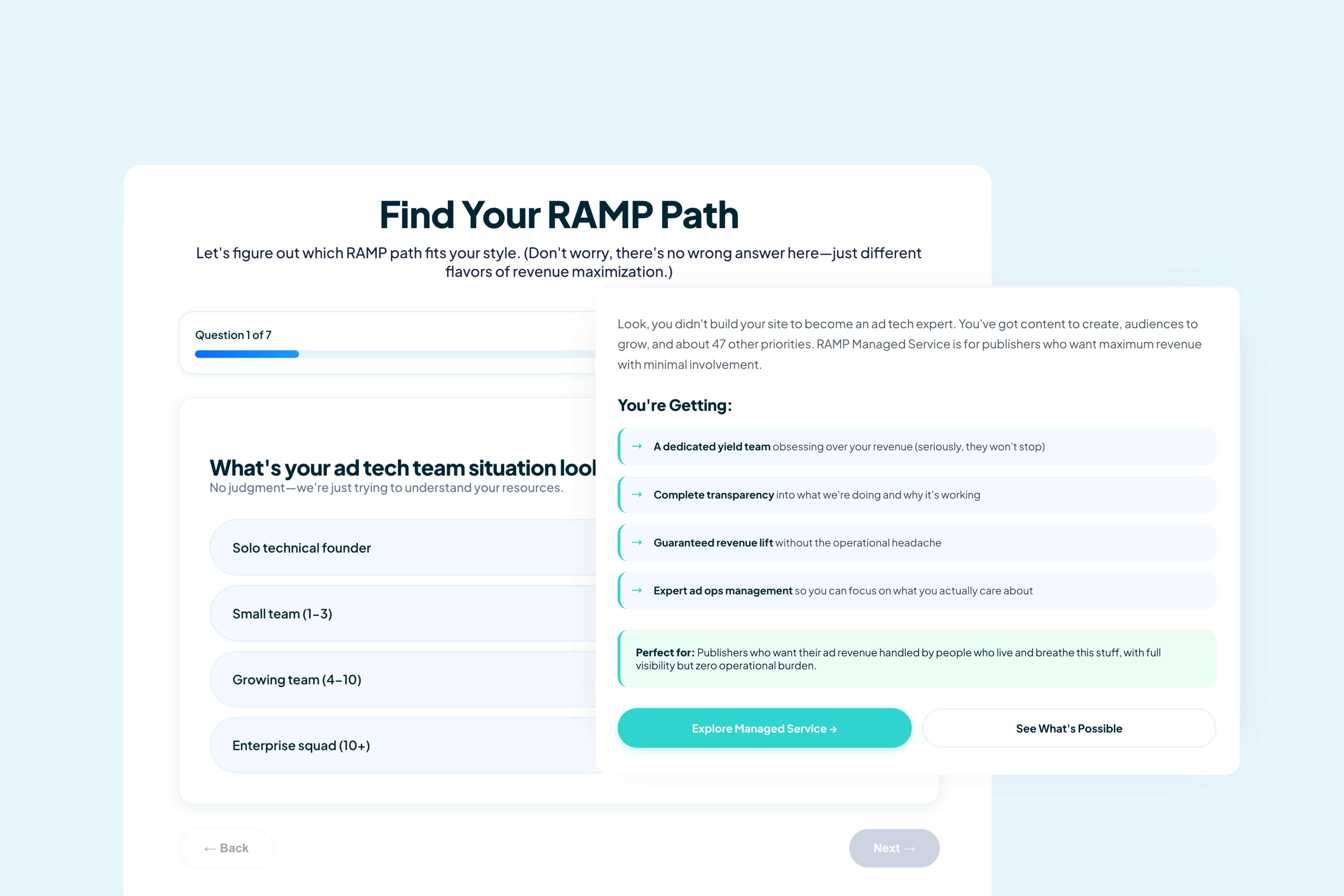
The platform combines AI-driven yield optimization, server-side header bidding, 250+ first-party data segments, and direct relationships with premium brands actively spending in lifestyle, travel, and health verticals. For publishers who want to focus on content while experts handle monetization, RAMP Managed Service delivers maximum revenue with minimum operational overhead. For publishers with technical teams who want granular control, RAMP Self-Service provides enterprise-grade tools with full visibility into every auction setting.
Either way, you stop cobbling together vendors and start operating with a unified platform built to grow lifestyle publisher revenue without compromising the user experience your brand depends on. That's the technical comparison that actually matters.
Talk to a Playwire expert to see how the platform performs against your current setup.