
-1.png?width=800&height=157&name=1-playwire-logo-primary-2021%20(1)-1.png)


May 21, 2026

Editorial Policy
All of our content is generated by subject matter experts with years of ad tech experience and structured by writers and educators for ease of use and digestibility. Learn more about our rigorous interview, content production and review process here.
Key Points
- Google Subscription Linking does not improve organic search rankings. It is a personalized discovery tool, not a ranking signal.
- The tool surfaces your content in a "From your subscriptions" panel on Google Search and Discover, but only for users who have already linked their account to yours.
- Correctly implementing structured data for gated content protects your existing search visibility; it doesn't create new ranking lift.
- The real revenue story is engagement depth on your identified audience, not net-new traffic from search.
- Publishers chasing SEO gains from Subscription Linking are solving the wrong problem and missing the real value the tool provides in the process.
Every few months, a question makes the rounds in publisher forums and ad ops Slack channels: "Does Google Subscription Linking improve SEO?" The short answer is no. The longer answer is that this misconception is costing publishers the chance to understand what Subscription Linking actually does well, which turns out to be quite valuable once you stop expecting it to do something it was never designed to do.
This isn't a knock on Google's tooling. It's a call to read the product documentation more carefully than the marketing headlines. For the full picture of how these tools fit together, see our complete publisher's guide to Reader Revenue Manager identity, engagement, and ad revenue.
What Google Subscription Linking Does
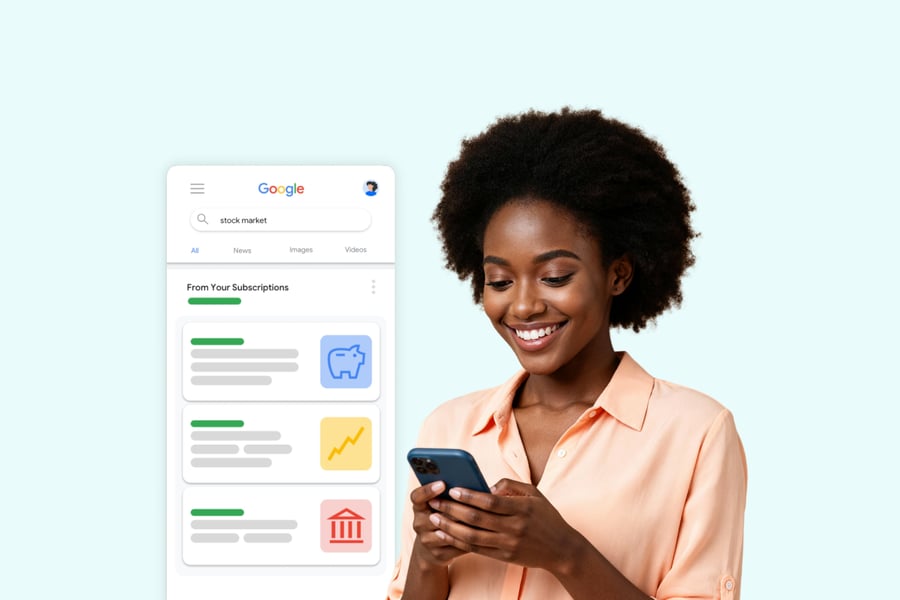
Subscription Linking is a free feature inside Google's Reader Revenue Manager ecosystem. Its purpose is to connect a reader's publisher subscription to their Google Account, then surface that publisher's content in two specific places: the "From your subscriptions" module on Google Search results pages and the "From your subscriptions" section in Google Discover.
Those are the two surfaces it touches.
Neither is the organic rankings column. Both are personalized, per-user, and visible exclusively to readers who have completed the linking flow on your site. Your domain authority, your keyword positions, your crawl coverage: none of that moves because of Subscription Linking.
The mechanism is personalization, not optimization. Understanding that distinction is the entire ballgame.
The Four Search Effects, Separated Clearly
Publishers conflate four distinct things when they talk about Google Subscription Linking and SEO. Treating them as the same thing is where the confusion starts.
| Search Effect | What It Is | Who Sees It | Does It Change Rankings? |
|---|---|---|---|
| "From your subscriptions" SERP panel | Personalized content module on Search results | Only users who have linked their account | No |
| "From your subscriptions" Discover section | Personalized content surface in Google Discover | Only users who have linked their account | No |
| Structured data for gated content | JSON-LD markup signaling paywalled/registered content to Googlebot | Googlebot (indexing health) | Defensive. Prevents loss, no uplift |
| Organic ranking benefit | Algorithmic ranking improvement from Subscription Linking | All users | Does not exist |
Learn more about each of these below:
The "From Your Subscriptions" SERP Panel
When a reader links their publisher subscription to their Google Account, Google starts surfacing that publisher's content in a dedicated carousel on Search results pages. For the reader, this is useful: they see more content from sources they've already paid for or registered with, surfaced contextually based on what they're searching.
For the publisher, the value is engagement depth on a cohort that already chose you. The Indian Express measured a 34% lift in pageviews among linked subscribers over a three-month period, compared to 9% for unlinked subscribers. That's a 25-percentage-point delta coming from Google's personalized surface alone.
Those pageviews are coming from existing subscribers. Nobody new is discovering you through this panel. It deepens a relationship rather than creates one.
The Discover Surface
Google Discover is a meaningful traffic source for publishers in entertainment, sports, gaming, and lifestyle verticals. Most publishers already see some Discover traffic; Subscription Linking drops your content into a dedicated "From your subscriptions" section for linked users, separate from the broader algorithmic feed.
This is not about reaching new audience. It's about showing up more reliably and more prominently for people who have already said they want your content. News Corp Australia measured a 30% engagement lift through Subscription Linking, and the mechanism is the same: more touchpoints with a committed audience, not algorithmic visibility to strangers.
For publishers, this is a real multiplier on a high-value cohort. A fantasy sports platform with 50,000 linked users who start getting daily Discover exposure to its content isn't collecting new users. It's compounding the value of the ones it has.
Structured Data for Gated Content
This is where the SEO connection is real, but the direction runs opposite to what most publishers assume.
When you implement Subscription Linking (or any registration or paywall model), you're required to add structured data to your article pages signaling to Googlebot which content is gated. The relevant JSON-LD pattern includes isAccessibleForFree: false and hasPart markup on every gated article.
Without that markup, Google's anti-cloaking systems can interpret content that's visible to users but hidden from crawlers as deceptive. The Wall Street Journal learned this the hard way: after ending its "First Click Free" model without implementing proper structured markup, it saw a 44% drop in search traffic. That's not a rounding error.
Correct markup prevents a ranking penalty. It does not produce ranking gains. It's defensive infrastructure. You're protecting what you've already built, not adding to it.
Google's Subscribed content report in Search Console exists specifically to help publishers track and fix indexing issues for paywalled content. If you're running any registration or paywall model and haven't checked that report recently, do that before anything else.
The Algorithmic Ranking Benefit
Based on what Google says, there isn't one. Nothing in Google's product documentation, in independent SEO analysis, or in any public Google statement suggests Subscription Linking produces an algorithmic ranking boost. It's what the documentation says.
The isAccessibleForFree structured data, implemented correctly, maintains your search visibility and keeps Googlebot correctly informed about what's accessible. It does not boost rankings. Its job is to prevent loss, not manufacture gain.
Essential Background Reading:
- What Is Google Reader Revenue Manager? Definition and FAQs: The foundational explainer on what RRM is, who it's for, and how Standard and Enterprise differ.
- Reader Revenue Manager: The Complete Publisher's Guide to Identity, Engagement, and Ad Revenue: The pillar piece covering the full identity-to-revenue framework this article fits within.
- Understanding the Impact of Keyword Rankings and the Best Strategies for Improving Your Search Engine Ranking: Baseline SEO context for publishers who want to understand what actually moves rankings.
- How to Incorporate Schema Markup for SEO on Your Website: Structured data fundamentals that apply directly to gated content implementation.
Why the Misconception Persists
The confusion comes from a few compounding factors.
First, Google markets Subscription Linking partly around the word "visibility". Accurate, but ambiguous. "Your content gets more visibility to subscribers" and "your content gets better visibility in search" sound similar enough that the distinction blurs in casual reading.
Second, the engagement metrics are real and significant. When publishers see 30% engagement lifts and 34% pageview increases in linked cohorts, it's easy to retroactively attribute that to "SEO working." The actual mechanism is personalized surfaces doing exactly what personalized surfaces are supposed to do.
Third, most publishers never disambiguate between their total organic traffic and their linked-subscriber traffic. If engagement goes up post-implementation and you're not segmenting your analytics, it looks like organic is performing better. Understanding how keyword rankings actually affect your traffic makes this distinction much clearer.
What Google Subscription Linking Delivers for Publishers
If Subscription Linking isn't an SEO play, what is it? For ad-supported publishers specifically, it's three things operating together.
Engagement multiplier: Linked users consume more of your content, more often. That means more ad impressions on your own properties from a cohort that already trusts you. For an ad-supported publisher, more pageviews from existing users translates directly to more inventory at your current CPM rates.
Identity infrastructure: The Publisher Provided Identifier (PPID) generated during the linking flow is the same identifier that flows into Google Ad Manager 360 for programmatic targeting. On cookie-less inventory. Safari traffic, Firefox traffic, opted-out Chrome users. PPIDs allow buyers to apply audience targeting and frequency capping rather than bidding blind. Google's beta data showed 15%+ programmatic auction revenue lift when passing PPIDs on inventory without other identifiers. That's an ad revenue play, not an SEO play. For a deeper look at how PPIDs recover cookie-less revenue, see our guide to publisher provided identifiers and programmatic lift.
Direct sales surface: A registered, linked audience with known attributes is something a direct sales operation can put in front of advertisers. Audience segments built on first-party data from registered users command meaningful CPM premiums. The Wall Street Journal reports that advertisers running campaigns against its first-party data segments were 37% more likely to renew. That's a retention metric with real revenue implications.
None of these benefits touch your keyword rankings. All of them affect your revenue.
Related Content:
- Google Subscription Linking Explained: What It Does, What It Doesn't, and How It Connects to Ad Revenue: The definitive deep-dive on Subscription Linking mechanics, surfaces, and revenue connections.
- isAccessibleForFree: The Complete Guide to Structured Data for Paywalled and Gated Content: Everything you need to implement the JSON-LD patterns that protect your search visibility.
- Google Reader Revenue Manager Standard vs. Enterprise: Which Version Do You Actually Need?: Feature and engineering lift comparison to help you choose the right implementation path.
- Ad Revenue vs. Subscription Revenue: How to think about hybrid monetization models and where each revenue stream creates the most value.
- How Does Contextual Advertising Work: Contextual targeting as the baseline that first-party audience data builds on top of.
Subscription Linking vs. Subscription Spotlighting
Google's August 2025 rollout of "Preferred Sources" and Subscription Spotlighting is related to Subscription Linking but distinct from it. Subscription Spotlighting surfaces publisher content for subscribers through a different discovery mechanism and is part of Google's broader effort to reward publishers who have established reader relationships.
The key difference: Subscription Spotlighting operates more broadly across Google's surfaces, while Subscription Linking's "From your subscriptions" panel is specifically tied to the account-linking flow through Reader Revenue Manager. Publishers who've implemented Subscription Linking are positioned to benefit from both features, but they're not interchangeable. The SEO non-effect applies to both. Neither produces algorithmic ranking lift. For a full breakdown of how Subscription Linking works technically, see our Google Subscription Linking explained guide.
Next Steps:
- How to Set Up Google Reader Revenue Manager: Step-by-step implementation guide from Publisher Center signup through code placement.
- Google Subscription Linking Implementation Guide: swg.js, PPIDs, and the Revenue Case for Building It Right: Full RRME architecture walkthrough including swg.js integration and server-side entitlement sync.
- Publisher Provided Identifiers: How PPIDs Recover Cookie-Less Ad Revenue: The programmatic revenue mechanics behind the 15%+ auction lift Google's beta partners documented.
- From Anonymous to Known: How Identified Readers Translate to Higher Ad Revenue: The full revenue case for converting anonymous visitors into identified, addressable audience.
- Beyond Google Ad Revenue: Sophisticated Strategies for Sophisticated Publishers: Advanced monetization tactics for publishers ready to move past platform-dependent revenue.
Does Subscription Linking Work for Non-News Publishers?
Yes, and this is one of the most underreported facts about the product. Every existing guide to Subscription Linking assumes a news publisher. Gaming sites, fantasy sports communities, education platforms, and entertainment hubs are largely absent from the implementation coverage. Which means they're also largely absent from the implementation numbers.
The opportunity is large. Consider what identified, linked audiences look like in different verticals:
- Gaming publishers: Console preference, genre interest, spending tier, and esports engagement are all capturable through registration and surveys. These segments map directly to advertiser targeting categories that command CPM premiums. See how this plays out in our guide to gaming publisher first-party data, identity, and segmentation.
- Sports publishers: League following, fantasy and betting participation, team affiliation, and professional vs. amateur interest create granular audience definitions that programmatic buyers will pay for.
- Education publishers: Role-based segmentation (student, teacher, parent), subject focus, and exam prep stage are highly valuable to ed-tech advertisers and curriculum vendors. COPPA compliance requirements apply to any education platform serving users under 13, a topic that deserves its own dedicated treatment.
- Entertainment publishers: Genre preference, viewing platform, and fandom depth give direct sales teams something to sell beyond contextual adjacency.
Specialist publishers in these verticals also tend to convert registration walls at the higher end of the industry benchmark range. The documented conversion rate for news publishers sits between 0.5% and 2% per visitor per month; B2B and specialist publishers reach 6%. A gaming site with a deeply engaged community isn't a news publisher and shouldn't use news publisher benchmarks to project its registration opportunity.
What Publishers Should Do With This Information
Stop measuring Subscription Linking against an SEO KPI. The tool will fail that test every time, and you'll miss the value it's delivering on the metrics that matter.
The right measurement framework looks like this:
- Engagement depth per linked user: Track pageviews, session duration, and return visit frequency for the linked cohort vs. unlinked subscribers vs. anonymous visitors. This is where the 34% Indian Express delta shows up.
- PPID coverage as a percentage of Safari and Firefox inventory: This is the programmatic revenue recovery story. Higher PPID coverage on cookie-less traffic means that inventory bids closer to identified inventory rates.
- Direct sales deal composition: Track what percentage of your direct sales campaigns are running against registered audience segments vs. contextual-only placements. Registered segments should command a CPM premium.
- Search Console Subscribed Content report health: This is your only SEO-adjacent metric, and it's purely defensive. Clean it up and keep it clean.
One thing worth doing immediately if you haven't: audit your structured data for every paywalled or registration-gated article. The isAccessibleForFree markup needs to be present and accurate on all of them. This is the WSJ cautionary tale. Not dramatic infrastructure work, but skipping it is expensive.
See It In Action:
- SparkNotes: How an education publisher balanced ad revenue and user experience while building a hybrid subscription model, including privacy compliance across a student audience.
- All Media Network: How an entertainment publisher portfolio maintained consistent revenue growth through premium direct deals and audience-first ad strategy.
- Publishers Turn Community Data Into Revenue as Third-Party Limits Bite: How publishers across verticals are activating first-party and community data to replace cookie-dependent revenue.
- Gaming Publisher First-Party Data: Identity, Segmentation, and CPM Lift: Vertical-specific application of identity infrastructure for gaming publishers with segmentation and revenue examples.
How Playwire Connects to This Picture
Our RAMP platform comes complete with a Hashed Email API that allows publishers to securely transmit matched emails up the supply chain to advertisers for bidding and inclusion in our Data Management Platform. Whether you use Google's tools for capturing subscriptions or any others, we have the infrastructure to turn those emails into higher CPMs.
Subscription Linking is the upstream identity layer. Activating that identity for ad revenue requires the downstream infrastructure to match. That's where we operate. Publishers looking to go beyond Google ad revenue with more sophisticated monetization strategies will find that identity infrastructure is the prerequisite for almost every advanced tactic.
If you're building a registration or subscription model and want to understand what the ad revenue side of that equation looks like with the right infrastructure behind it, talk to our team.
Frequently Asked Questions About Google Subscription Linking and SEO
Does Google Subscription Linking boost organic search rankings?
No. Google Subscription Linking does not improve organic search rankings. It is a personalization tool that surfaces publisher content in a "From your subscriptions" panel on Google Search and in Google Discover, but only for users who have already linked their publisher account to their Google Account. It has no effect on where a publisher's content ranks for any user who has not completed that linking flow.
What is the "From your subscriptions" panel on Google Search?
The "From your subscriptions" panel is a personalized content module that appears on Google Search results pages for users who have linked their publisher subscriptions to their Google Account through the Subscription Linking feature in Google's Reader Revenue Manager. The panel surfaces content from linked publishers based on what the user is searching for. It is visible only to users who have completed the account-linking flow. Other users on the same SERP see no difference.
Does Subscription Linking increase website traffic?
Subscription Linking increases content exposure for users who have already linked their accounts, which can produce meaningful engagement lift on that specific cohort. The Indian Express measured a 34% pageview lift among linked subscribers compared to 9% for unlinked subscribers over a three-month period. Subscription Linking does not drive net-new traffic from users who are not already subscribers or registrants. It deepens engagement with an existing audience rather than expanding the top of the funnel.
How is Google Subscription Linking different from traditional SEO?
Traditional SEO targets algorithmic ranking signals to improve organic search visibility for all users. Google Subscription Linking is a personalization feature that improves content discovery only for users who have already linked their publisher account to their Google Account. SEO affects where content appears in search results for any user; Subscription Linking affects which additional content surfaces appear for a specific, already-converted user cohort.
Does Subscription Linking work for non-news publishers?
Yes. Google Subscription Linking is available to any publisher with paying subscribers, not only news publishers. Gaming sites, sports communities, education platforms, and entertainment publishers are all eligible as long as they have active paying readers and meet Google's Reader Revenue Manager eligibility requirements. Non-news publishers in specialist verticals often see higher registration conversion rates than general news publishers, making the engagement and identity benefits of Subscription Linking proportionally more valuable.
What publishers are eligible for Google Subscription Linking?
Google Subscription Linking is available to publishers with paying subscribers who use Google's Reader Revenue Manager Enterprise (RRME). Publishers must have a Google Publisher Center account, a Google Cloud project with the Subscription Linking API enabled, and an OAuth service account with the appropriate scope. The feature is available in 40+ countries. Publishers on the standard RRM tier without paying subscribers are not eligible for Subscription Linking, though they can still use Reader Registration and other RRM features.
How do I get my content into the "From your subscriptions" section on Google Search and Discover?
To get content into the "From your subscriptions" surfaces, you need to implement Google's Subscription Linking feature through Reader Revenue Manager Enterprise. This requires integrating the swg.js client library, implementing the linkSubscription method, generating a stable Publisher Provided Identifier (PPID) for each subscriber, and syncing subscriber entitlements to Google via the Subscription Linking API. You also need structured data on all article pages and a Google Cloud project with the Subscription Linking API enabled. Once a subscriber completes the linking flow on your site, your content becomes eligible to appear in their personalized "From your subscriptions" panels. See our step-by-step guide to setting up Google Reader Revenue Manager for the full implementation walkthrough.
