
-1.png?width=800&height=157&name=1-playwire-logo-primary-2021%20(1)-1.png)

March 23, 2026

Editorial Policy
All of our content is generated by subject matter experts with years of ad tech experience and structured by writers and educators for ease of use and digestibility. Learn more about our rigorous interview, content production and review process here.
Why Display Ads Keep Entertainment Publishers Stuck
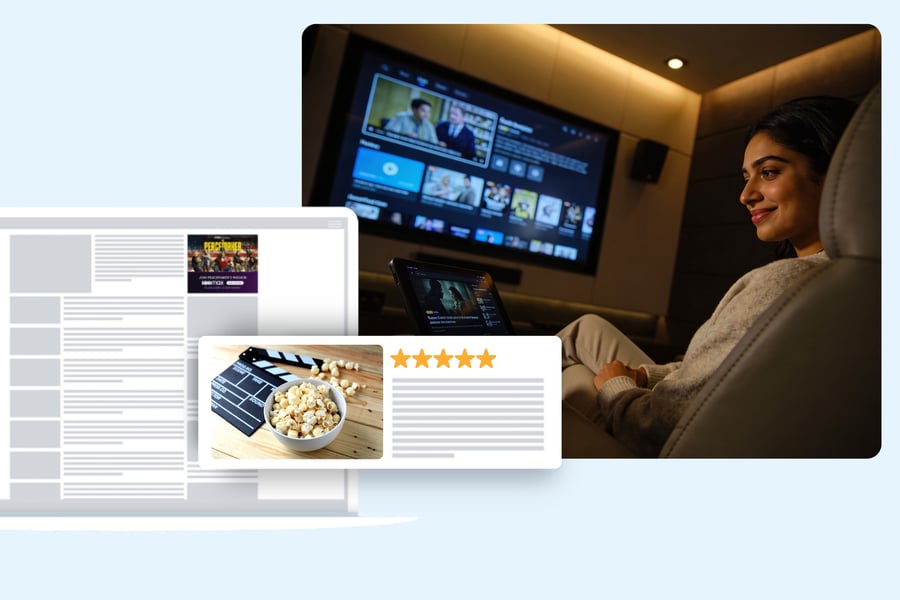
Entertainment websites have a monetization problem that most publishers don't fully understand until they've already left significant revenue behind. The problem isn't the audience. Entertainment fans are loyal, engaged, and highly sought after by premium advertisers. The problem is the toolset.
Standard display advertising was designed for a generic content environment. It treats a film database the same as a coupon site. It doesn't account for the fact that entertainment audiences behave differently, that studios and streaming platforms have massive direct budgets, or that high-impact formats in this vertical command dramatically different CPMs than a 300x250 banner.
Most entertainment publishers running standard display setups are capturing a fraction of their actual revenue potential. The rest is flowing to publishers who understand how to structure an inventory stack that reflects the premium nature of their audience and the appetite of entertainment advertisers.
Effective entertainment website monetization strategies need to go beyond the basics. This article breaks down what that actually looks like in practice.
Need a Primer? Read This First:
- The Complete Guide to Entertainment Website Ad Revenue: Read this first to understand the foundational concepts this article builds on.
- How to Build an Ad Monetization Strategy: Read this first to understand the foundational concepts this article builds on.
The Entertainment Audience Is a Premium Asset
Understanding why entertainment publishers can command higher CPMs requires understanding the audience. Entertainment fans are not passive browsers. They're actively engaged with content they care about deeply, returning frequently, and consuming at depth. A user scrolling through a film database for 20 minutes behaves very differently from someone skimming a news article for 45 seconds.
This behavioral profile is exactly what premium entertainment advertisers are paying to reach. Studios allocating launch budgets, streaming platforms competing for subscriber attention, and entertainment brands seeking cultural alignment all want this audience. They're willing to pay significantly more per impression to reach them in the right context.
The challenge is that standard programmatic can't differentiate context at this level of nuance. It sees impressions. It doesn't see the engaged film fan with high purchase intent. Closing that gap requires a deliberate approach to inventory construction and demand access. That's why understanding how to master contextual advertising in the entertainment vertical is a prerequisite for any publisher serious about premium revenue.

Video Monetization: The CPM Jump Entertainment Sites Are Missing
Video advertising commands premium CPMs in the entertainment vertical because the contextual fit is obvious. An entertainment site discussing the latest streaming releases is a natural environment for video creative from those same streaming platforms. The category alignment creates value that programmatic algorithms reward.
The misconception many entertainment publishers carry is that capturing video ad dollars requires original video content production. It doesn't. Outstream video formats generate video revenue from text-based page environments. Publishers capture video budgets without running a production operation.
If you're starting from scratch, getting video ads on your website is more straightforward than most publishers assume. The CPM impact is immediate.
Outstream Video: Revenue Without a Production Budget
Outstream video is a video ad unit that loads independently of any video content on the page. It renders within editorial content, plays automatically (sound off), and collapses as the user scrolls. The publisher doesn't need to produce a single second of video to monetize with it.
Flex Video, Playwire's large-format outstream unit, loads above the fold and stays visible as users scroll. Entertainment publishers using this format see it deliver video CPMs against their text content. The unit is designed specifically for content-heavy pages where video production isn't practical but video ad demand is readily available.
The CPM differential between outstream video and standard display is substantial. For a full breakdown of what to look for when building a video monetization strategy, the complete guide to rewarded video ads and outstream formats covers the landscape across web, app, and beyond.
Pre-Roll and Instream for Publishers Who Produce Video
Entertainment publishers with video content have an additional layer of opportunity. Instream pre-roll commands the highest CPMs in the display and video ecosystem because the user is actively choosing to consume video content. The ad plays in a context of explicit viewer intent.
For publishers producing reviews, trailers, retrospectives, or any video content, instream pre-roll is table stakes. The incremental implementation effort is minimal compared to the CPM uplift.
Entertainment advertisers specifically budget for instream placements because the contextual alignment with their creative is direct. Publishers with mobile or app video inventory can extract even more value. Mobile app video ads are a consistent lever for revenue growth that most entertainment publishers underutilize.
Related Content:
- The Unexpected Benefits for Publishers When Adding Video: Related coverage from across Playwire's content library.
- Mixing the Ad Revenue Business Model with Other Monetization Strategies: Related coverage from across Playwire's content library.
- Unlocking Additional Revenue Streams: The Growing Role of Brand Partnerships: Related coverage from across Playwire's content library.
High-Impact Ad Formats That Match the Entertainment Experience
Standard ad units were designed for minimum disruption. High-impact units are designed for maximum presence. In the entertainment vertical, the audience often expects and accepts immersive advertising because the entertainment context normalizes it. Movie trailer experiences, full-screen streaming ads, and branded entertainment are native to this space.
High-impact formats don't just deliver better viewability. They unlock an entirely different category of advertiser budget. Direct campaigns from major studios and streaming platforms specifically request high-impact placements. Publishers without them are invisible to those buyers.
The table below summarizes the key high-impact ad formats available for entertainment publishers and their performance benchmarks.
Format | Description | Best Use Case |
Flex Skin | Full-page takeover, 100% SOV | Studio film launches, streaming platform campaigns |
Flex Rail | Sticky side overlay, expands to full-screen on mobile | Sustained brand presence throughout session |
Flex Leaderboard | Cross-platform responsive adhesive unit | Consistent visibility across desktop and mobile |
Flex Video | Large-format outstream, above-fold, sticky scroll | Video CPMs from text-based editorial pages |
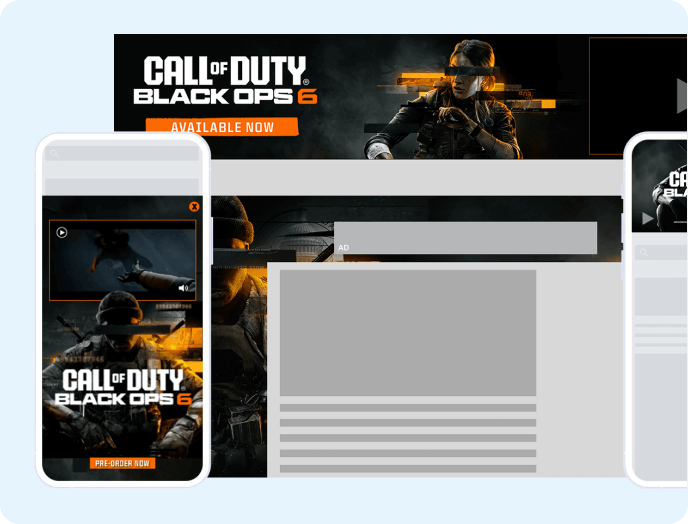
The Flex Suite is particularly well-suited to entertainment publishers because it mirrors the experience entertainment brands already invest in. A studio launching a film expects takeover-level creative. The Flex Skin delivers that experience in a web environment, making it the natural format for entertainment direct campaigns. Playwire's direct sales team has placed Flex Skin campaigns with Disney, Netflix, Amazon Prime Video, and HBO Max across entertainment publisher inventory.

Dynamic Ad Injection for Non-Standard Page Architectures
Entertainment sites often have page architectures that weren't built for ad monetization. Film databases, show trackers, music catalogues, and community platforms don't follow the standard article template. Standard ad injection logic breaks on these environments, leaving pages undermonetized or creating poor user experiences.
Dynamic ad injection technology solves this. Content-aware placement logic analyzes page structure, content length, and user behavior to position ads intelligently. For a film detail page with limited text, the logic adapts. For a long-form review with deep engagement, it adjusts accordingly. The result is monetization that fits the architecture rather than fights it.
If your site runs single-page applications, infinite scroll, or database-style content, you need injection logic built for those patterns. Standard ad tag implementations weren't. They'll either break the experience or leave impressions on the floor.
Next Steps:
- Video Ad Monetization for Entertainment Publishers: Technical Best Practices: The logical next step after mastering the concepts in this article.
- Take Control of Your Entertainment Site's Ad Strategy: A Technical Framework: The logical next step after mastering the concepts in this article.
Sponsored Content Frameworks for Entertainment Publishers
Sponsored content is the revenue opportunity that most entertainment publishers approach informally, then wonder why it doesn't scale. A single sponsored post here, a branded integration there. No repeatable process, no defined inventory, no consistent pricing. The result is a revenue stream that feels more like a side hustle than a business line. That's not a knock. It's just what happens without structure.
A defined sponsored content framework changes that. It tells advertisers exactly what they're buying, what it costs, and what they'll get. It makes your inventory legible to buyers who are planning campaigns months in advance and allocating real budget.
What a Sponsored Content Framework Includes
Before you take the first deal, you need to define what you're selling. Advertisers need to know what they're buying. Ambiguity in the proposal becomes conflict in execution.
A well-structured framework covers these components. Lock them down before you pitch to anyone with a real budget.
- Content types available: Define whether you offer sponsored editorial, branded video, listicles, review placements, or newsletter integrations. Clarity here prevents misaligned expectations.
- Disclosure standards: Define how sponsorship will be labeled. Entertainment publishers who maintain clear disclosure build trust with audiences and avoid regulatory complications.
- Production ownership: Define whether your editorial team produces the sponsored content, the advertiser supplies it, or it's a collaboration. Each model has different pricing implications.
- Distribution scope: Define whether sponsored content is promoted via social, newsletter, homepage, or paid distribution. Premium entertainment advertisers expect defined reach guarantees.
- Performance reporting: Define what metrics you'll report. Impressions, time on page, click-through, and scroll depth all tell different stories. Align on measurement before the campaign starts.
- Pricing structure: Define rates for each content type and distribution combination. A sponsored editorial with newsletter promotion priced the same as a basic article creates margin problems.
Seasonal Campaign Opportunities in Entertainment
The entertainment calendar creates natural sponsored content opportunities that publishers should be proactively selling against. Award season, franchise premieres, sporting events, and major release windows all create demand spikes where entertainment advertisers are actively looking for premium placements.
Entertainment publishers who build editorial calendars around these moments and present them as packaged sponsorship opportunities stop reacting to advertiser requests and start driving them.
A publisher who approaches a studio with a curated award season coverage package two months before the Oscars is having a very different conversation than one waiting for an inbound RFP. Tracking the right KPIs during those campaigns matters too.
Measuring the performance of your ads with six key metrics applies directly to sponsored content performance measurement.
Direct Sales: Where the Real CPM Uplift Lives
Programmatic advertising is the floor of entertainment publisher revenue, not the ceiling. The ceiling is direct sales. And in the entertainment vertical, that ceiling is significantly higher than in most other categories.
Studios, streaming platforms, and entertainment brands allocate substantial media budgets specifically to publisher direct deals. These campaigns require brand-safe environments, premium placement quality, and audience alignment that programmatic can't guarantee. They also require relationships and inventory that programmatic can't access.
Understanding the full comparison between programmatic advertising and direct buying makes the revenue gap obvious. Publishers who rely solely on programmatic aren't just leaving money on the table. They're leaving the whole dinner on the table.
Playwire's data from entertainment publisher partners illustrates the gap clearly. Direct sales combined with the Flex Suite delivers 19x higher CPMs than programmatic alone. That's not a marginal improvement. That's a fundamentally different revenue model.

What Makes Entertainment Publishers Attractive to Direct Buyers
Direct entertainment advertisers aren't buying impressions. They're buying context, audience alignment, and placement quality. Entertainment publishers attract direct budgets when they can demonstrate three things: a premium, brand-safe environment; an engaged, entertainment-focused audience; and inventory formats capable of delivering the brand experience the advertiser is paying for.
Standard display inventory can't compete for these budgets because the format doesn't support the creative. A studio launching a franchise film wants a takeover experience, not a banner. A streaming platform promoting a new series wants video context, not static display. High-impact inventory is the prerequisite for direct sales success in entertainment. The benefits of direct sales for publishers breaks down exactly why the CPM gap is so dramatic.
The Case for Managed Direct Sales Access
Most entertainment publishers don't have dedicated direct sales teams. Building one is expensive and takes years to develop the agency and brand relationships that generate consistent deal flow. The alternative is partnering with a sales organization that already has those relationships.
Playwire's direct sales team has established relationships with major entertainment advertisers including Disney, Netflix, Amazon Prime Video, and HBO Max. These relationships are accessible to Playwire publisher partners without requiring publishers to staff and manage their own sales operation. The premium campaign opportunities flow to publishers whose inventory qualifies.
Letterboxd's experience illustrates this dynamic. After partnering with Playwire, Letterboxd saw a 243% year-over-year ad revenue increase. The presence of direct demand changed the competitive dynamics of every auction on the site.
First-Party Data and Audience Segmentation in Entertainment
Entertainment publishers sit on first-party audience data that most don't fully exploit. Film fans segmented by horror vs. drama vs. arthouse audiences. Music fans segmented by genre. Sports fans segmented by team loyalty. These are not generic audiences. They're defined audience segments that command premium CPMs from advertisers who want exactly that specificity.
A data management platform (DMP) with proper audience segmentation turns a general entertainment publisher into a precision targeting vehicle. The CPM differential between an unidentified impression and one attached to a verified audience segment is meaningful. Playwire's hashed email API delivers a 42% average CPM increase for publishers using it. That reflects how much advertisers are willing to pay for audience certainty over anonymous impressions.
Harnessing the power of first-party data with a DMP is the practical playbook for publishers ready to turn their audience knowledge into a revenue moat.
Entertainment publishers who invest in first-party data capture and audience segmentation are building a competitive moat that becomes more valuable as third-party cookie deprecation continues. The publishers who own their audience data will command premium CPMs regardless of what happens to third-party targeting infrastructure.

How Playwire Powers Entertainment Publisher Monetization
Playwire works with 50+ entertainment sites across film, TV, music, sports, and multimedia verticals. The platform was built to handle the specific technical and commercial challenges of entertainment properties, including non-standard page architectures, passionate audiences with high UX expectations, and the premium direct demand that flows through the entertainment advertising ecosystem.
The RAMP platform consolidates the full ad tech stack into a single integration: header bidding, video player, data management, direct sales access, and proprietary AI and machine learning algorithms that optimize yield on every impression. Entertainment publishers who currently manage multiple vendors get a meaningful reduction in technical complexity alongside meaningful revenue improvement.
Publishers with internal technical teams can choose RAMP Self-Service for full auction-level control. Publishers who want their monetization managed while they focus on content can choose RAMP Managed Service, where Playwire's yield optimization team manages the stack on their behalf.
The results across entertainment publisher partners speak to the opportunity. Letterboxd achieved a 243% year-over-year revenue increase. All Media Network consistently outperforms alternative solutions. Lambgoat saw 50% revenue uplift within the first two months.
Entertainment publisher monetization strategies that go beyond display ads deliver results that standard implementations simply can't touch.
If your entertainment site is running standard display and calling it a monetization strategy, you're leaving the best part of your revenue potential on the table. The audience is premium. The advertiser demand is there. The question is whether your inventory stack is built to capture it.

FAQ: Entertainment Website Monetization Strategies
What are the most effective entertainment website monetization strategies beyond display ads?
The highest-impact entertainment website monetization strategies beyond display ads include outstream and instream video units, high-impact formats like Flex Skin and Flex Leaderboard, structured sponsored content programs, and direct sales partnerships. Direct sales combined with high-impact inventory delivers up to 19x higher CPMs than programmatic display alone.
Do entertainment publishers need original video content to run video ads?
No. Outstream video ad units like Playwire's Flex Video load independently of any publisher-produced video content. They generate video CPMs from text-based editorial pages, which means entertainment publishers can capture video advertising budgets without running a video production operation.
Why do entertainment publishers command higher CPMs than other content verticals?
Entertainment publishers attract premium direct advertising budgets from studios, streaming platforms, and entertainment brands that allocate significant media spend to reach engaged, interest-specific audiences. These advertisers are willing to pay premium CPMs for high-impact placements on brand-safe entertainment sites with audience alignment that generic programmatic targeting can't replicate.
What is the Flex Suite and why does it matter for entertainment publishers?
The Flex Suite is Playwire's proprietary collection of high-impact ad formats, including Flex Skin, Flex Rail, Flex Leaderboard, and Flex Video. These formats are 100% share-of-voice placements unavailable through standard networks and SSPs. They enable entertainment publishers to access direct campaign budgets from major entertainment brands that specifically require high-impact placements.
How does first-party data improve CPMs for entertainment publishers?
First-party audience segmentation allows entertainment publishers to offer verified, interest-specific audience data to advertisers. Playwire's hashed email API delivers a 42% average CPM increase for publishers who implement it, reflecting the premium advertisers pay for audience certainty over anonymous programmatic impressions.