
-1.png?width=800&height=157&name=1-playwire-logo-primary-2021%20(1)-1.png)

August 17, 2026

Editorial Policy
All of our content is generated by subject matter experts with years of ad tech experience and structured by writers and educators for ease of use and digestibility. Learn more about our rigorous interview, content production and review process here.
.png?width=900&name=Breaking%20News%20Placeholder%20(1).png)
Key Points
- Apple is reportedly in talks to pay publishers nine figures to license news content for a revamped Siri AI assistant.
- The proposed model is pay-per-use, not a fixed licensing fee. Publishers get paid only when Siri uses their content.
- This is materially different from most AI licensing deals and could set a precedent for how AI companies compensate content creators.
- Publishers should watch this closely, but shouldn't count on AI licensing revenue to replace what they're losing in referral traffic.
- Whatever Apple pays, it won't cover the full cost of declining search-driven traffic. Monetizing the sessions you still have matters more than ever.
What Apple Is Reportedly Proposing
According to a Wall Street Journal report, Apple has approached news publishers about licensing their content for an upgraded Siri AI assistant. The budget under discussion: nine figures, starting at $100 million. That's real money, and it represents something we haven't seen much of from major AI players.
The structure Apple has proposed is a "variable compensation plan." Publishers get paid proportionate to how often Siri pulls from their content, not for signing over broad access upfront. That's a significant structural difference from the fixed-fee deals that companies like OpenAI and Google have struck with publishers.
Apple already runs a similar model with Apple News+, where publishers earn payments based on share of clicks generated within the platform. The new Siri deal would extend that logic into AI-assisted search and query answering.
Why the Pay-Per-Use Model Matters
Most AI licensing deals have worked like this: a large AI company pays a publisher a fixed annual fee, gets broad rights to a content archive, and then uses that content however it wants. The publisher gets predictable revenue. The AI company gets flexibility. Publishers give up any claim to performance-based upside.
Apple's proposed model inverts some of that logic. If Siri uses a publisher's article to answer a query, that publisher gets a cut. If Siri doesn't use it, the publisher doesn't get paid.
That creates real incentives that didn't exist before. High-quality, current content benefits most: publishers who produce timely, accurate, well-structured news have more to gain under a usage-based model. Visibility into AI referrals becomes a negotiating point, because if compensation is tied to usage, publishers have grounds to demand data on how often their content appears in Siri responses. And publishers who know their content is high-traffic and authoritative can negotiate harder on per-use rates.
The precedent this sets matters beyond Apple. If a pay-per-use model proves viable at scale, it puts pressure on other AI companies to move away from flat-fee buyouts.
Essential Background Reading:
- AI and Publishers Resource Center: Everything publishers need to know about AI's impact on content, traffic, and revenue. In one place.
- AI Crawler Resource Center for Publishers: How AI bots crawl your content, what they're after, and what your options are for controlling access.
- News Publisher Guide: A comprehensive look at ad monetization strategy built specifically for news and editorial publishers.
- Publisher Ad Tech Stack: What a modern publisher stack looks like and how each layer contributes to revenue performance.
The Part Publishers Shouldn't Overlook
AI licensing revenue and referral traffic are not the same thing, and they don't compensate for each other.
A publisher that signs an Apple deal gets paid when Siri uses their content. But users who get their answers from Siri aren't necessarily clicking through to the publisher's site. That's still a zero-session outcome from an ad revenue perspective. The AI reads the article so the user doesn't have to.
This tension is real across the industry. AI tools are increasingly satisfying queries that previously drove users to publisher pages. Referral traffic from search is declining for many publishers, and AI-generated summaries are accelerating that trend.
The math for publishers depends on their content type. News organizations with high-frequency, time-sensitive reporting may generate enough Siri usage events to make the deal meaningful. Evergreen content publishers face a harder calculus: their content might be used constantly, but usage-based rates at low per-event figures won't replace the ad revenue those articles generated when users loaded the page.
Related Content:
- Should Publishers Let AI Bots Crawl Their Sites: The tradeoffs between blocking AI crawlers and leaving the door open, and how to think about the decision.
- Anthropic's $1.5B Copyright Settlement: What the Anthropic settlement signals about AI companies' legal exposure and what it means for publisher content rights.
- Omnicom's AI Media Buying: How AI is reshaping the buy side of programmatic and what that shift means for publisher revenue.
- Publishers Push AI Content Marketplaces: How publishers are organizing to create structured AI content licensing channels and what's driving the push.
What Publishers Should Do Right Now
The Apple news is a useful signal, but it's not an action item for most publishers yet. Negotiations are ongoing and no deal has been announced. Here's what makes sense to do now.
Assess your content's AI-citation potential: high-frequency news, authoritative evergreen guides, and content that surfaces regularly in AI-generated answers are most valuable in a usage-based licensing scenario.
Track your referral traffic trends: if search-driven sessions are declining, you need to know now, not when renewal conversations happen. Use Google Search Console and Chartbeat to establish your baseline.
Optimize yield on sessions you have: declining referral traffic means every session that does land on your site needs to work harder. RPS optimization matters more when total session volume is under pressure.
Watch the precedent carefully: if Apple's pay-per-use model becomes standard, it creates a framework for negotiating with other AI platforms. Document your content's AI surface area now so you have leverage later.
Next Steps:
- Yield Experiment Playbook: Practical frameworks for testing and improving programmatic yield when session volume is under pressure.
- Google Search Console for Publishers: How to use GSC data to track traffic shifts and protect ad revenue as search patterns change.
- News Publishers Ad Revenue Resource Center: Tools, guides, and strategy for news publishers navigating a shifting traffic and revenue landscape.
- Reader Revenue Manager. The Complete Publisher's Guide: Identity, engagement, and ad revenue strategy for publishers building durable session value.
The Revenue Picture Doesn't Simplify
AI licensing and ad revenue aren't substitutes for each other. They sit in different parts of the publisher P&L and solve different problems. Licensing fees are gross revenue, often paid as a lump sum or quarterly, with no correlation to session-level performance. Ad revenue is tied directly to user behavior, session quality, and demand-side pricing dynamics.
Publishers shouldn't let promising licensing headlines distract from the ongoing work of maximizing programmatic yield. The two revenue streams require different strategies, different conversations, and different counterparties.
See It In Action:
- Our Publishers Are Partners, Not Just Customers: How Playwire approaches publisher relationships and what that means for long-term revenue outcomes.
- Publisher Ad Revenue Maturity Model: A framework for assessing where your monetization operation stands and what the next level looks like.
How We Think About This
We work with publishers across gaming, education, entertainment, news, and sports. The pattern we see consistently: publishers who focus on monetizing their existing traffic more effectively are in a stronger position than those waiting on licensing deals to close.
AI licensing deals, when they materialize, tend to benefit publishers with legal resources and negotiating scale. The $100 million figure Apple reportedly discussed sounds large until you divide it across a meaningful number of publishers. The per-publisher math gets smaller fast.
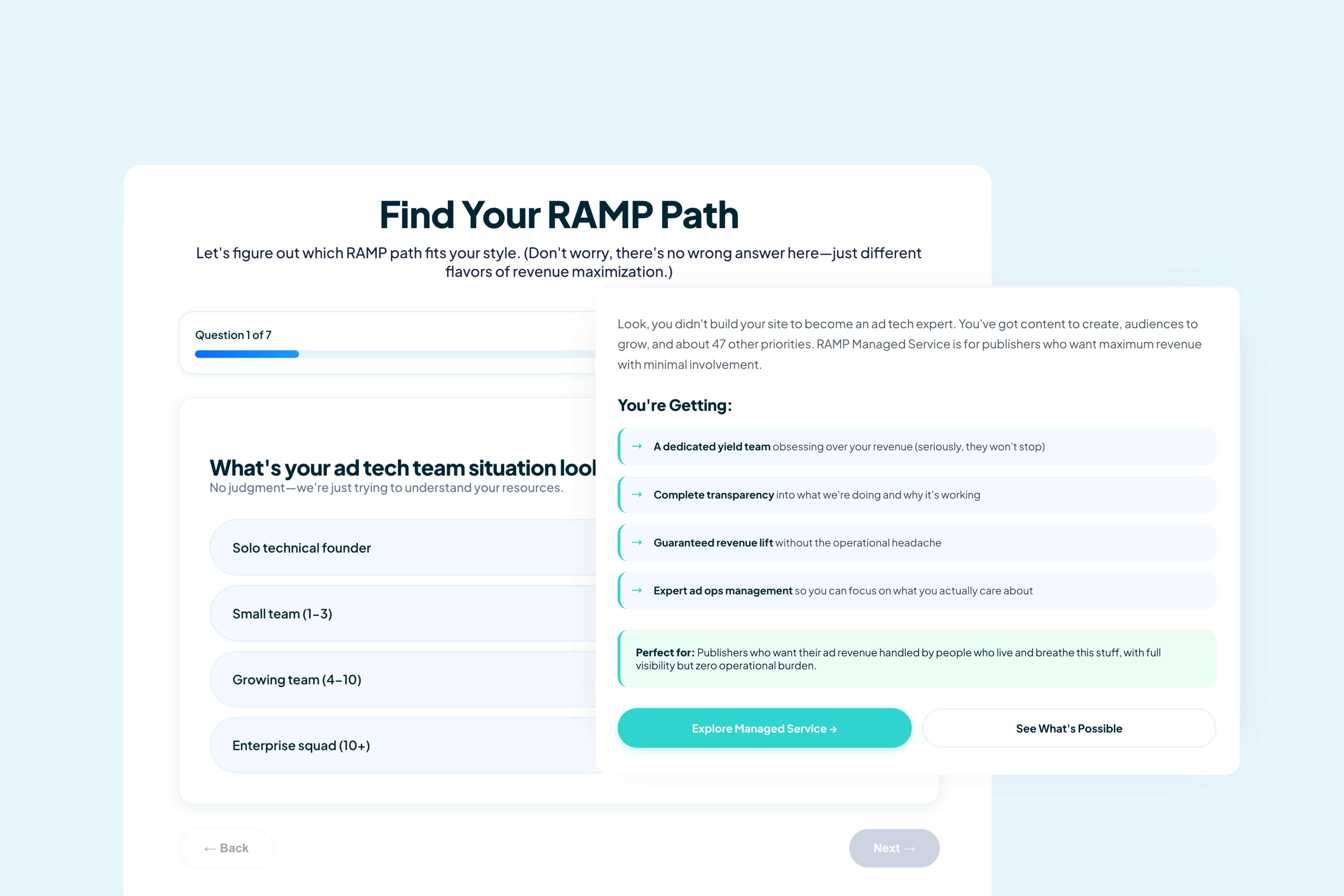
What doesn't shrink is the value of a well-monetized session. Our RAMP platform is built to maximize revenue from every user who does visit your site: smarter price floors, optimized ad layouts, direct demand, and full transparency into what's driving performance. If AI is reducing your total session volume, the answer is to make each remaining session worth more.
If you want to talk through what that looks like for your specific traffic profile, we're here.
