
-1.png?width=800&height=157&name=1-playwire-logo-primary-2021%20(1)-1.png)


December 30, 2025

Editorial Policy
All of our content is generated by subject matter experts with years of ad tech experience and structured by writers and educators for ease of use and digestibility. Learn more about our rigorous interview, content production and review process here.

The Dashboard Transparency Problem Nobody Talks About
Here's something the ad tech industry doesn't want you thinking about too hard. You're running a business where ad revenue might represent between 50-100% of your total income. Yet most publishers manage that revenue with dashboards showing 2-day old data with little granularity.
The typical publisher dashboard shows revenue totals, maybe some basic CPM data, and if you're lucky, a breakdown by ad unit. That's it. The rest happens in a black box. Your monetization partner makes optimizations, adjusts settings, tweaks price floors, and you find out about it when your revenue changes.
This isn't how sophisticated ad monetization should work. Publishers deserve visibility into every lever being pulled, every optimization being tested, and every decision being made with their inventory.

What Real Transparency Actually Looks Like
Real transparency means having access to the operational data that drives your revenue performance. Your dashboard should function as a control center where you can see not just outcomes but the entire decision-making process.
A transparent dashboard delivers three core capabilities that traditional ad tech reporting completely misses:
- Real-Time Optimization Visibility: See every change as it happens. When your yield ops team adjusts a price floor, you see it immediately with rationale and projected impact.
- Granular Revenue Attribution: Every dollar traces back to specific optimizations. If CPMs jumped 15% last Tuesday, you have the tools to identify exactly which changes contributed and in what proportion.
- Comprehensive Performance Context: Get the full story across every dimension including competitive benchmarks, historical trends, and seasonal patterns.
Read all blogs in the Transparency in Ad Monetization series:
Essential Dashboard Components
A truly transparent dashboard requires specific functional components. These aren't optional features. They're fundamental requirements for informed decision-making.
AI Recommendation Transparency
Modern yield optimization relies on machine learning. Your dashboard should show you what these algorithms are doing and why.
Every AI-driven recommendation needs visibility. You should see the data informing the recommendation, the projected impact, and the performance difference when live. This transparency builds trust in the technology making decisions about your revenue.
Revenue Attribution Matrix
Here's where most dashboards completely fail. A proper attribution matrix shows exactly which optimizations drove which results.
Attribution Component | Revenue Impact | Implementation Date | Status |
Price floor optimization | Dollar/percentage impact from changes | When implemented | Active/Testing |
Demand partner additions | Revenue contribution from new sources | Partnership start | Active/Review |
Ad unit optimization | Impact from placement/format changes | Launch date | Live/Testing |
Refresh rate adjustments | Revenue change from timing mods | Implementation date | Active/Monitor |
Inventory Performance Analytics
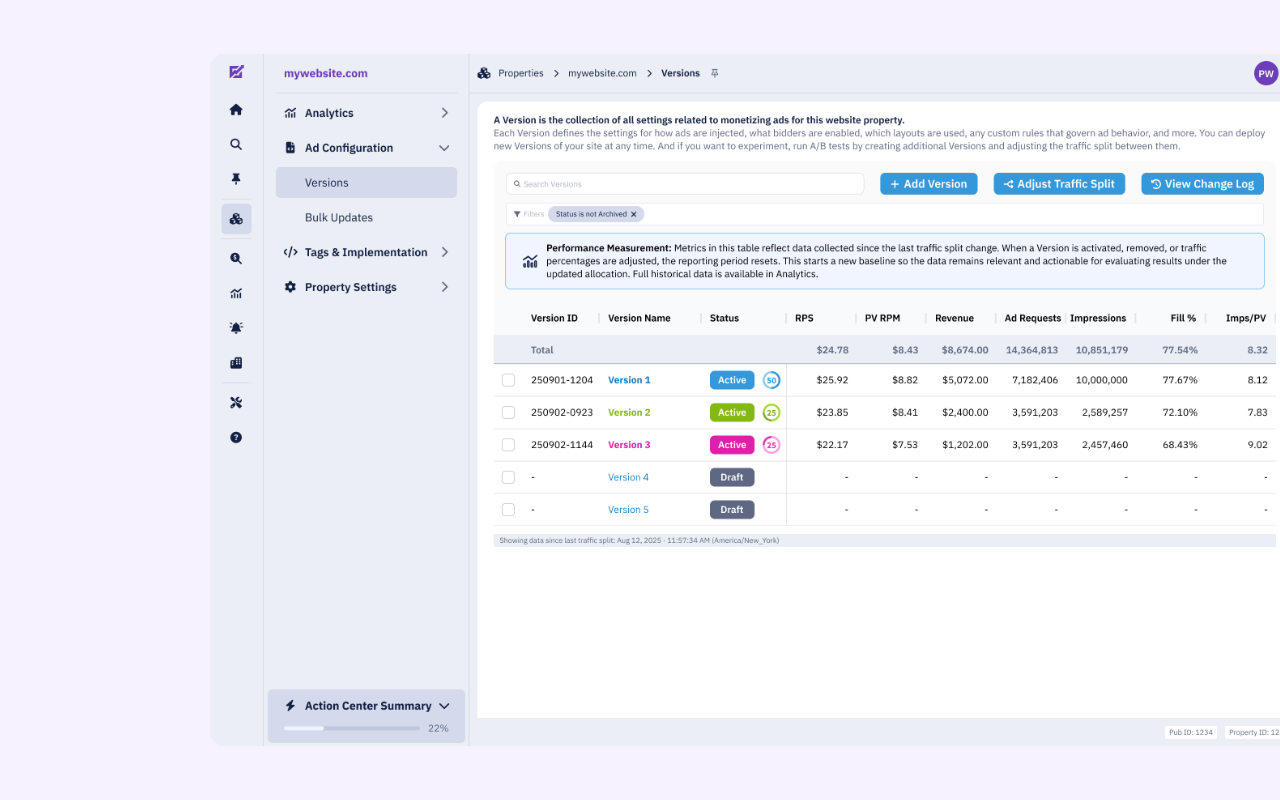
Your dashboard needs comprehensive analytics showing inventory performance across every dimension that matters:
- Standard metrics: CPMs, fill rates, viewability (table stakes)
- Content performance: Revenue by content type and section
- Geographic data: CPMs and fill rates by user location
- Device breakdowns: Performance across mobile, desktop, tablet
- Temporal patterns: Revenue by time of day and day of week
These analytics should be real-time or near real-time. Waiting 24-48 hours for data means you're always operating with old information.

Technical Requirements for Transparency
Building a transparent dashboard requires specific technical capabilities that many legacy platforms can't deliver.
Real-Time Data Processing
Transparency requires current data. Your platform needs data processing infrastructure with sub-minute latency for most metrics. Real-time data also enables real-time alerting when something breaks or performance drops significantly.
API Access
Standard dashboard views serve most use cases, but sophisticated publishers need custom analysis for specific questions. Robust API access lets you pull data into your own BI tools, create custom reports, and integrate ad revenue data with other business metrics.
Granular Filtering
Your dashboard should let you filter and segment performance data across multiple dimensions simultaneously. Want to see video CPMs for mobile traffic from the UK viewing gaming content between 6-10 PM? That should be a few clicks.
How Transparent Dashboards Enable Strategic Decisions
The purpose of dashboard transparency isn't just seeing more data. It's making better decisions about your monetization strategy.
Publishers with transparent dashboards operate fundamentally differently than those relying on black-box solutions:
- Proactive vs. reactive: Spot issues before they significantly impact revenue
- Hypothesis-driven: Test specific optimization theories with clear tracking
- Strategic vs. tactical: Understand your business deeply enough to optimize long-term
Identifying Optimization Opportunities
When you can see performance across all inventory dimensions, patterns emerge. You might notice certain content types consistently undermonetize. Or specific time windows show unusually strong demand. Or mobile traffic from particular geos commands premium CPMs.
These insights let you adjust strategy proactively rather than waiting for your account manager to suggest changes.
Testing and Learning
Transparency enables systematic testing that improves performance over time. When you see exactly what impact specific changes have on revenue, you can run controlled tests of different optimization strategies.
This transforms optimization from guesswork into science. You develop knowledge about what works for your specific inventory and audience.
Common Transparency Red Flags
Not all dashboards that claim transparency actually deliver it. Watch for these warning signs:
- Delayed data updates: Once or twice daily updates indicate technical limitations
- Aggregate-only reporting: Inability to drill down to granular details
- Hidden optimizations: Behind-the-scenes changes without visibility
- No historical context: Current performance without comparison capabilities
- Limited exports: Restrictions on accessing your own data
Why Playwire Built Transparency Into RAMP Self-Service
We spent years listening to publishers describe frustrations with opaque monetization platforms. That feedback shaped how we built RAMP's analytics and reporting capabilities.
RAMP's dashboard shows you every optimization decision in real-time with clear explanations. Our AI and macine learning algorithms recommendations are fully visible. You see exactly which changes drove which revenue results through attribution analysis. API access lets you pull any dashboard data into your own BI tools.
We also recognize that transparency requires support. Our Partner Success team helps you interpret dashboard data and implement optimization strategies informed by what you're seeing.
Publishers using RAMP consistently tell us that visibility into their monetization operations changed how they think about their business. They make strategic decisions with confidence because they understand exactly what drives their revenue.
Ready to see what full transparency looks like? Our team can show you exactly how RAMP's dashboard answers every question in this article, using your own inventory as the example. Get started with Playwire and experience the difference that real transparency makes.
