
-1.png?width=800&height=157&name=1-playwire-logo-primary-2021%20(1)-1.png)


December 30, 2025

Editorial Policy
All of our content is generated by subject matter experts with years of ad tech experience and structured by writers and educators for ease of use and digestibility. Learn more about our rigorous interview, content production and review process here.
The Black Box Problem Costing You Money
Publishers face a trust problem. You hand over your inventory to ad monetization platforms that promise optimization and revenue growth. What you get in return? A revenue number and a "trust us, it's working" attitude.
That approach fails in three critical ways. You can't verify that optimizations are actually working. You lack the data needed to make informed strategic decisions. When revenue drops, you have no way to diagnose the problem or hold your partner accountable.
Read all blogs in the Transparency in Ad Monetization series:
What Real-Time Visibility Actually Means
Real-time visibility sounds like marketing fluff until you've spent a week waiting for yesterday's data. Publishers need instant access to what's happening right now, not what happened three days ago.
Proper visibility means seeing every optimization decision as it happens. When your platform adjusts a price floor, you should see that change immediately with the reasoning behind it. When an AI algorithm prioritizes one demand partner over another, you should understand why.
Your analytics dashboard should update within seconds of an impression serving. This immediate feedback loop enables you to identify issues before they compound into significant revenue losses. You should also see exactly which buyers are bidding on your inventory, what they're bidding, and how often they're winning.

Revenue Attribution: Connecting Actions to Outcomes
Revenue attribution answers the most important question in ad monetization: what specific changes drove what specific results? Most platforms hand you aggregate numbers that tell you revenue went up or down. They don't tell you why.
Effective revenue attribution requires granular tracking across multiple dimensions. You need to see how each optimization affected revenue at the ad unit level, page level, and site section level. You need to understand which demand partners contributed to increases and which ones are dragging down performance.
Consider a scenario where CPMs increase 15% over two weeks. Without proper attribution, you can't determine what drove that increase. Was it a new demand partner? Better price floor optimization? Seasonal demand? Improved viewability? Proper attribution data answers these questions definitively.
The technical challenge involves correlating hundreds of variables. Changes to price floors interact with demand partner performance, which interacts with user behavior, which interacts with content type. A sophisticated attribution system tracks all these variables and shows you exactly which combination drove your revenue changes.
The Critical Metrics That Actually Matter
Publishers drown in data while starving for insight. Every ad tech platform dumps thousands of metrics into dashboards without explaining which ones actually matter. Let's cut through the noise.
CPM alone tells you almost nothing useful. You need CPM broken down by ad unit type, demand partner, page section, and content category. This granular view reveals which parts of your inventory command premium rates and which parts are underperforming.
For instance, viewability directly impacts both CPMs and fill rates. Advertisers pay premium rates for viewable inventory and often won't bid at all on inventory with poor viewability. You need real-time viewability data showing exactly which ad units are underperforming.
Here's how these metrics interact to impact your revenue:
Metric | Impact on Revenue | Optimization Opportunity |
CPM by ad unit type | Identifies premium inventory | Expand high-performing unit types, reduce underperformers |
Fill rate by demand partner | Reveals demand quality | Remove partners with low fill, test new demand sources |
Viewability by placement | Affects advertiser bid rates | Reposition units with poor viewability, implement lazy loading |
Page RPM by content section | Shows content monetization efficiency | Focus strategy on high-value sections |

Performance Tracking Beyond Surface-Level Stats
Surface-level stats tell you what happened. Deep performance tracking tells you why and what you can do about it. Publishers need analytics that go several layers deeper than standard reporting.
You need to see how each demand partner performs across different inventory types, geos, device types, and user segments. Essential tracking dimensions include:
- Ad unit performance: CPM, fill rate, and viewability by unit type to identify which formats drive the most revenue
- Content section analysis: RPM, engagement, and session value by site section to show which content types attract premium demand
- Geographic breakdown: CPM by country and region to reveal high-value geo optimization opportunities
- Device segmentation: Performance across desktop, mobile web, and tablet to enable device-specific strategies
- Time-based patterns: Hour-of-day and day-of-week performance to optimize price floors by time
Your platform should automatically detect anomalies and alert you when metrics fall outside normal ranges. If your fill rate drops 10% overnight, you need to know immediately so you can diagnose and fix the problem.

Making Confident Decisions with Transparent Data
Data without context creates paralysis. Publishers need not just numbers but clear explanations that enable confident decision-making.
Consider the difference between these scenarios. In the first, your dashboard shows a 20% drop in CPMs with no context. In the second, your analytics show CPMs dropped specifically on mobile placements in the US, correlating with a demand partner reducing bid rates. You can now make an informed decision.
Transparent data enables you to optimize ad density by seeing exactly how additional units affect revenue and user engagement. You can evaluate new ad formats before committing. You can decide which content types deserve more investment. You can see the complete impact of every change you make to your ad setup.

Read our Guide to Monitoring Key Ad Revenue Metrics.
How Playwire Delivers True Transparency
Most ad monetization platforms talk about transparency. Playwire built our entire platform architecture around it. Every optimization our AI and machine learning algorithms make is visible and explainable in real-time.
You see exactly what's happening with your inventory at the impression level. When our AI adjusts a price floor, you see that change immediately. When we test new demand partners or ad formats, you have complete visibility into their performance impact.
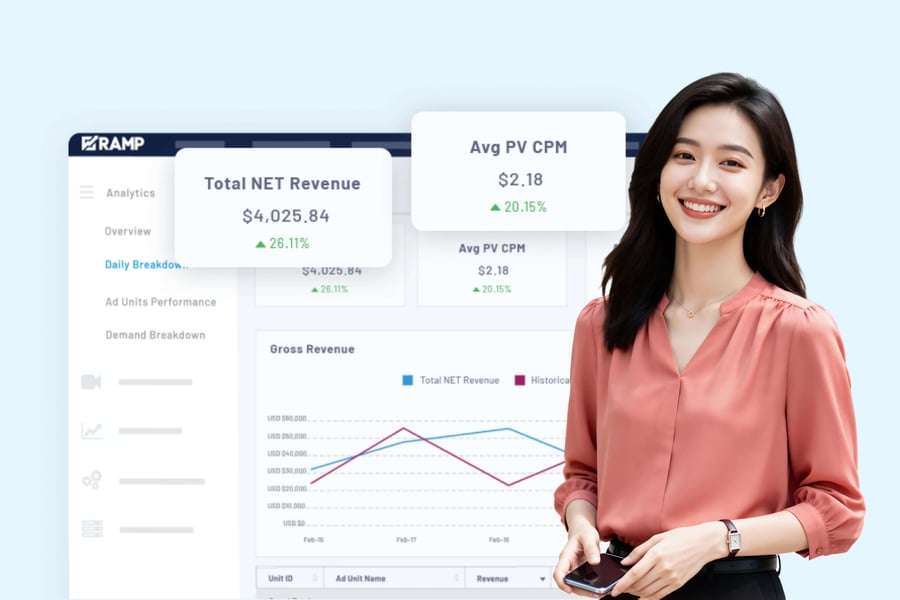
Our analytics platform processes billions of data points daily while maintaining real-time performance. You access the same data our yield optimization team uses. There's no separate "client dashboard" with limited functionality. You see everything.
Revenue attribution in RAMP shows you exactly which changes drove which results:
- Price floor optimization: See the direct revenue impact of every floor adjustment
- Demand partner performance: Track exactly where new partners add value and by how much
- Ad layout changes: View granular data proving the correlation between layout and session RPM
- Format testing: Understand complete performance profiles before committing to new units
The transparency extends beyond showing you data. We provide clear explanations of what the data means and what actions you should consider.
Publishers tell us this transparency changes how they think about monetization. When you can see exactly what's working, you can make strategic decisions confidently. You can validate that your partner is actually doing what they promised. You can identify opportunities that black box platforms would never reveal.
Transparency as Competitive Advantage
Publishers who demand transparency gain significant competitive advantage. You optimize faster because you see problems immediately. You test more effectively because you have clear data on what works. You scale confidently because you understand exactly what drives your revenue.
Smart publishers ask tough questions before choosing a monetization partner:
- Can you see every optimization decision?
- Can you track revenue attribution to specific changes?
- Do you have access to granular performance data across all dimensions?
- Can you export your data for further analysis?
- Does the platform explain what the data means and suggest actionable improvements?
Your revenue deserves complete transparency. You shouldn't have to trust a black box algorithm to maximize your work. The difference between mediocre monetization and exceptional monetization comes down to visibility. Publishers who can see what's happening can optimize effectively. Publishers operating in the dark are just guessing.
