
-1.png?width=800&height=157&name=1-playwire-logo-primary-2021%20(1)-1.png)


January 14, 2026

Editorial Policy
All of our content is generated by subject matter experts with years of ad tech experience and structured by writers and educators for ease of use and digestibility. Learn more about our rigorous interview, content production and review process here.

The Engineering Bottleneck Problem
Every publisher knows the frustration. You spot an optimization opportunity, develop a hypothesis, and then... you wait. Your engineering team has other priorities. Your ad strategy change sits in a queue behind product features, bug fixes, and that migration project that was supposed to finish last quarter.
This bottleneck costs real money. Ad tech moves fast. Market conditions shift daily. Advertisers change spending patterns quarterly. The strategy that worked last month might be leaving revenue on the table today.
Here's the uncomfortable truth: most publishers are running their ad strategy on autopilot because they can't access the controls. Their platforms require code changes for basic adjustments. Their tools were built for developers, not for revenue teams. And every optimization idea becomes a mini-project instead of a quick configuration change.
Read all blogs in the Take Control of Your Ad Strategy series:
What Strategic Automation Should Actually Look Like
True strategic automation means you set the rules, and the system executes them consistently at scale. You define your priorities, your constraints, your acceptable trade-offs. Then machine learning and AI algorithms work within that framework to maximize results.
This approach differs fundamentally from black-box automation where you have no visibility into decisions. It also differs from manual optimization where every change requires human intervention.
The sweet spot combines your strategic intelligence with algorithmic efficiency. You configure the guardrails. The system handles the millions of micro-decisions that no human could manage in real time.
The 8 Ad Strategy Configurations You Shouldn't Need Engineering For
Publishers deserve granular control over their ad monetization without deployment cycles or code releases. These ten configuration areas represent the minimum standard for a truly self-service platform.
1. Ad Unit Placements and Layouts
Your ad layout directly impacts both revenue and user experience. Yet many publishers can only adjust layouts through code changes or support tickets.
Visual configuration tools should let you customize ad placements based on multiple factors without touching code:
- Page section or content type: Different layouts for homepage versus article pages versus category archives
- Traffic source: Unique configurations for organic, social, referral, and direct visitors
- User geographic location: Region-specific placements based on advertiser demand patterns
- Device category: Optimized layouts for desktop, tablet, and mobile experiences
You should be able to drag and drop ad positions, set conditional rules for when units appear, and preview changes before pushing them live. Changes should deploy instantly, not during the next release cycle.
Configuration Capability | Without Visual Tools | With Visual Tools |
Move ad unit position | Engineering ticket, days to deploy | Minutes, immediate preview |
Add conditional logic by traffic source | Custom code development | Rule builder interface |
A/B test new layout | Development sprint required | Toggle in dashboard |
Roll back unsuccessful change | Emergency code revert | One-click restore |
2. Price Floor Rules
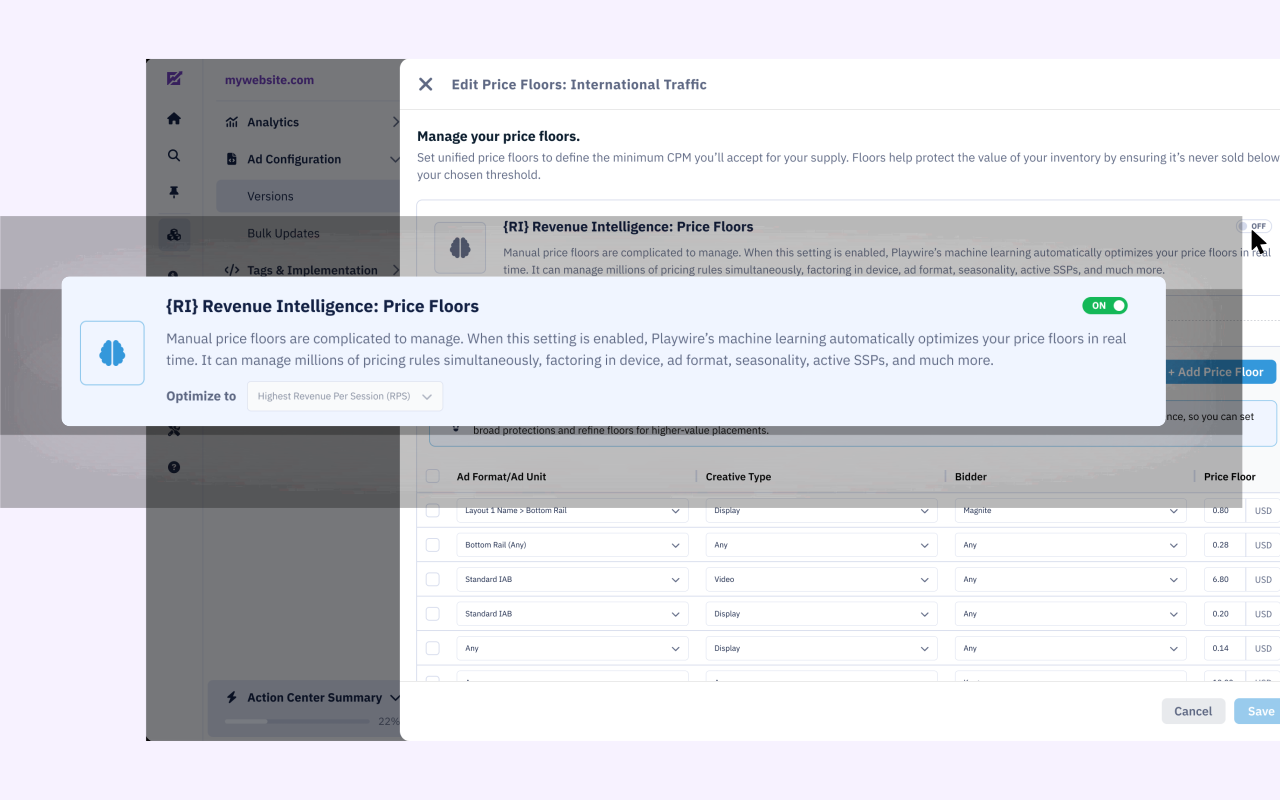
Price floors represent one of the most powerful levers for maximizing ad revenue. Setting a minimum CPM threshold creates competition among demand sources and increases the value of your inventory.
Managing price floors at scale requires sophistication. You might want different floors for premium content versus standard pages, higher floors during Q4 advertising season, and geographic-specific pricing based on advertiser demand in each market.
Modern platforms should offer visual rule builders for price floor configuration. You define the conditions, and the system applies your floors on every impression. Better yet, AI-powered price floor optimization can calculate dynamic floors based on hundreds of factors, all while you maintain override control.
3. Header Bidding Partner Management
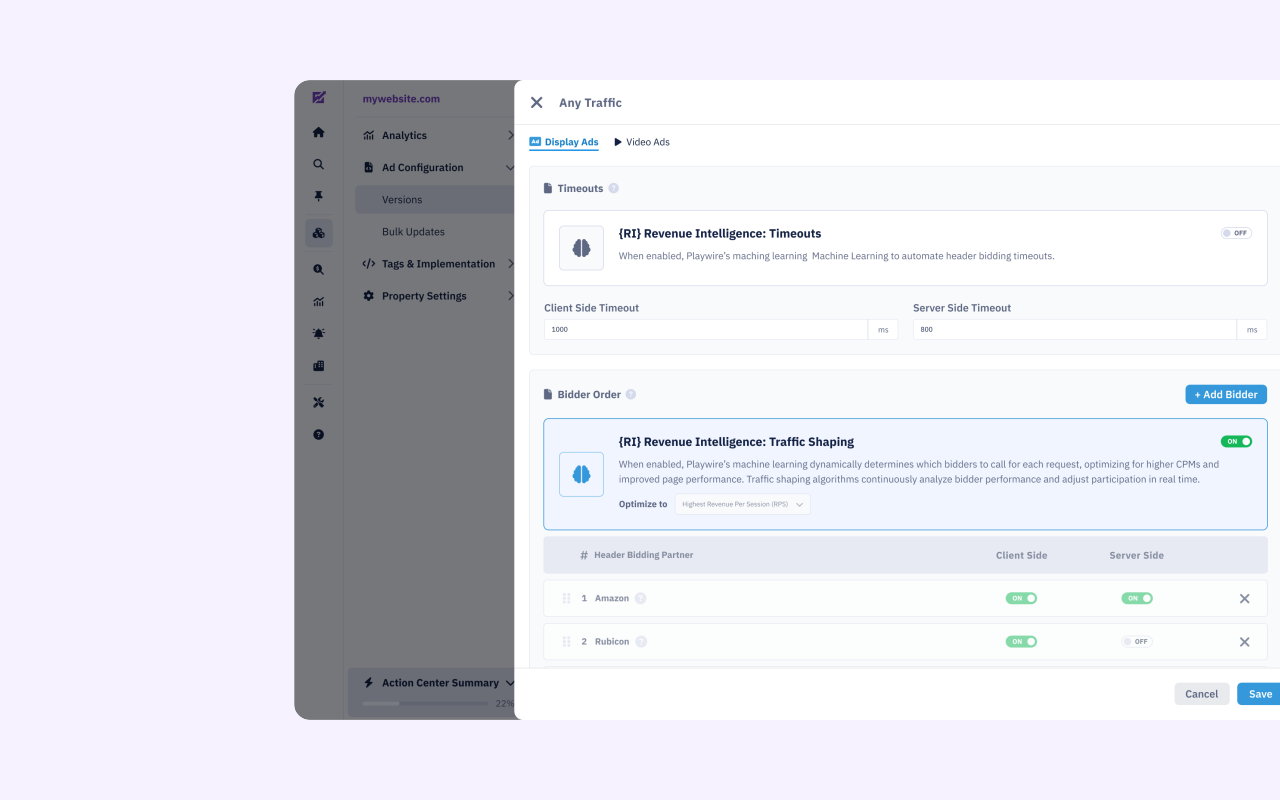
Your header bidding stack determines which demand sources compete for your inventory. Adding, removing, or adjusting bidder settings shouldn't require code deployments.
Visual bidder management should include these core capabilities:
- Toggle activation: Enable or disable integrated demand partners with a single click
- Timeout configuration: Set thresholds by bidder and device type to balance latency against bid opportunity
- Traffic shaping rules: Define which bidders to call under specific conditions based on geography, device, or content
- Performance monitoring: Automatic detection of underperforming partners with alerts and recommendations
Some publishers want to use their own SSP relationships. Others prefer leveraging their platform's pre-negotiated partnerships. A flexible system supports both approaches through configuration, not custom development.
4. Identity Solution Strategy
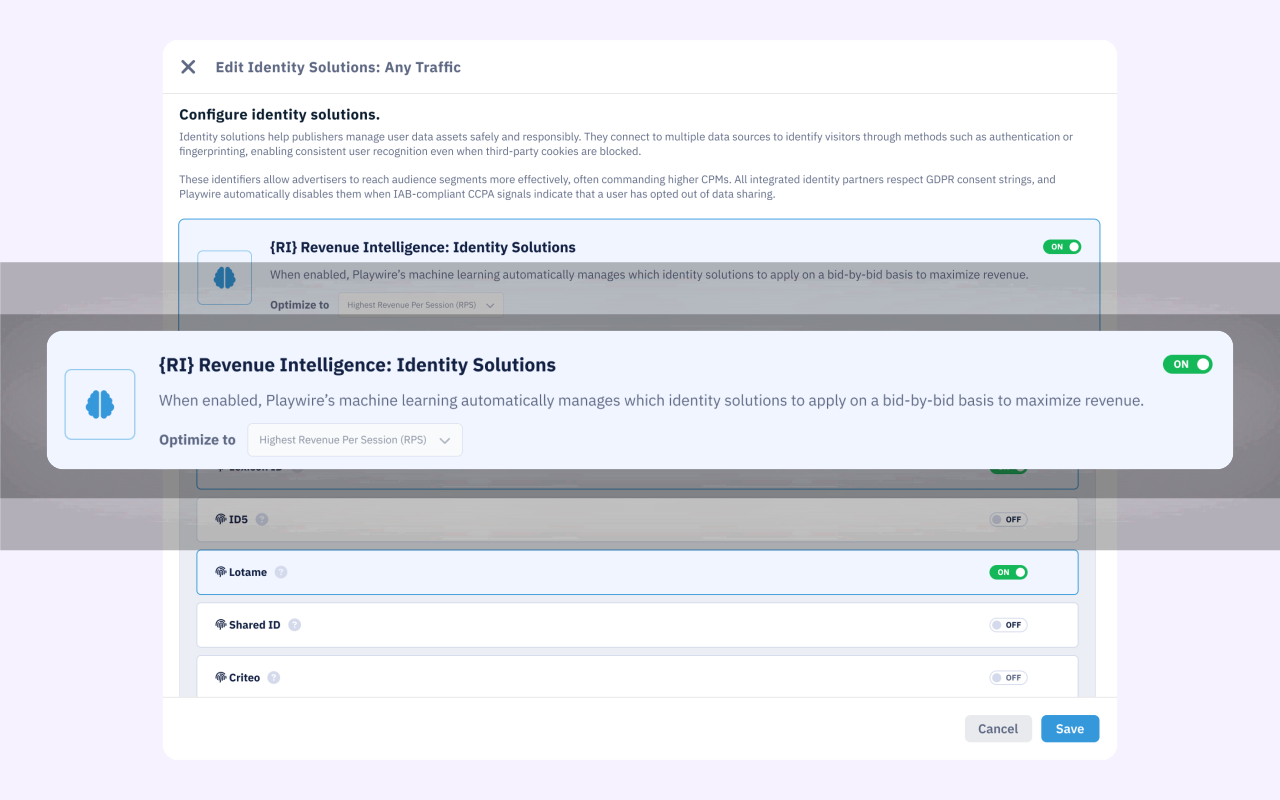
Identity solutions have become essential for maintaining ad value in a privacy-first world. Your strategy for when and how to deploy different identity providers affects both revenue and compliance.
Configuration options should let you determine which identity solutions activate under specific conditions:
- User authentication status: Different approaches for logged-in versus anonymous visitors
- Geographic region: Varied strategies based on privacy regulations in each market
- Cost-revenue balance: Rules that weigh identity solution costs against expected CPM improvements
- Fallback sequencing: Priority ordering when primary identity signals are unavailable
The platform should handle the technical implementation. You focus on the strategic decisions about which solutions to deploy and when.
5. Ad Refresh Settings
Ad refresh increases revenue by serving additional impressions to engaged users. But aggressive refresh damages user experience and can violate policy guidelines.
Visual configuration should cover these essential refresh parameters:
- Refresh intervals: How many seconds between refreshes, adjustable by ad unit or page type
- Maximum refresh caps: Limits per session or page to prevent policy violations
- Content-specific rules: Different behaviors for video pages, long-form articles, or interactive content
You shouldn't need engineering support to test whether 30-second versus 45-second refresh intervals perform better for your audience.

Read our Guide to Ad Monetization Platforms.
6. Experimentation and A/B Testing
Data-driven optimization requires experimentation. You should be able to set up A/B tests for layout changes, price floor strategies, or bidder configurations without development resources.
Visual experimentation tools should include these testing capabilities:
- Traffic allocation controls: Set what percentage of sessions see each variant
- Metrics dashboards: Clear performance comparisons showing revenue, viewability, and engagement by variant
- Statistical significance indicators: Know when you have enough data to declare a winner
- One-click deployment: Push the winning configuration to 100% of traffic instantly
Testing shouldn't be a special project. It should be how you operate every day, continuously refining your ad strategy based on real performance data.
7. Analytics and Reporting Configuration
Standard reports rarely answer your specific questions. You need custom views that match how your business thinks about performance.
Configuration capabilities should cover these reporting needs:
- Custom dimension combinations: Slice revenue by content category, traffic source, device, and geography simultaneously
- Automated report scheduling: Daily, weekly, or monthly reports delivered to stakeholders automatically
- Alert thresholds: Anomaly detection that notifies you when metrics fall outside expected ranges
- BI tool integration: Export data to your existing business intelligence platforms via API or direct connection
The data exists in the system. You shouldn't need engineering to extract it in the format you need.
8. Fallback and Error Handling
What happens when an ad call fails? When a bidder times out? When inventory goes unfilled?
Visual configuration for fallback behavior should address these scenarios:
- Default creatives: House ads or placeholder content for unfilled inventory
- Timeout thresholds: Custom limits by partner and device to balance revenue against latency
- Error handling priorities: Cascading rules that try partner B if partner A fails
- Passback chains: Backup demand sources that don't require code maintenance to update
Robust error handling protects revenue during edge cases. You should control that protection through configuration, not hope that someone wrote the right code.

View the Ad Monetization Platform Resource Center.
The Difference Configuration Control Makes
Publishers who control their ad strategy configuration operate fundamentally differently from those who don't. They iterate faster, test more hypotheses, and catch problems before they become expensive.
Consider the workflow difference when you spot a viewability issue on mobile devices:
- Without visual configuration: You file a ticket describing the problem. Engineering investigates. A fix gets scheduled. The change deploys in the next release. Weeks pass. Revenue leaks the entire time.
- With visual configuration: You identify the problematic ad unit in your analytics. You adjust the placement rules in the visual interface. You preview the change. You deploy it. The entire process takes minutes. You confirm the improvement in real-time data.
This difference compounds over time. Publishers who can iterate quickly run more tests, optimize more aggressively, and ultimately capture more revenue from the same traffic.
What to Look for in a Visual Configuration Platform
Technical publishers especially value control. When evaluating platforms, consider these essential capabilities:
- True visual interfaces: Look for drag-and-drop functionality, conditional rule builders, and real-time preview capabilities. There's a difference between a settings page and a genuine visual configuration tool.
- Granular control with AI assistance: The best platforms offer both. You can manually configure every setting if you choose, or enable AI optimization within the constraints you define.
- Version control and rollback: Every configuration change should be tracked. Rolling back to a previous state should be trivial. You need confidence that experimentation won't break anything permanently.
- Real-time deployment: Configuration changes should take effect immediately or within minutes. If changes require deployment cycles, you don't really have self-service control.
- Comprehensive documentation: Complex tools are worthless if your team can't use them effectively. Evaluate the learning curve alongside the feature set.
Do More With Less
Publishers face increasing pressure to optimize revenue without proportionally increasing headcount. Visual configuration tools directly address this challenge.
Your revenue team can manage ad strategy without relying on engineering bandwidth. Your ad ops specialists can implement best practices without writing code. Your leadership can see exactly what settings drive performance without requesting custom reports.
The time you used to spend on implementation now goes toward strategy. The energy you devoted to troubleshooting redirects toward optimization. You operate proactively rather than reactively.
Taking Control of Your Ad Strategy with Playwire
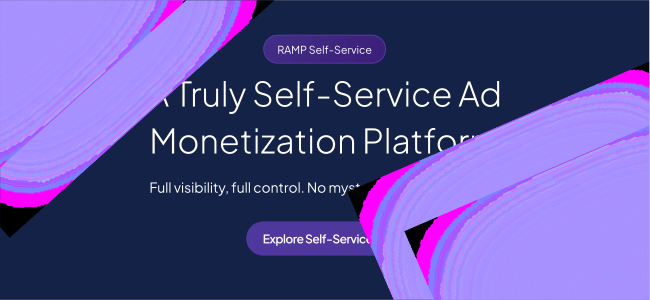
Playwire's RAMP Platform was built for publishers who want genuine control without engineering overhead. The platform combines visual configuration tools with AI-powered automation, letting you define your ad strategy while algorithms handle execution at scale.
The RAMP Self-Service platform includes:
- Visual ad layout configuration: Drag-and-drop placements with conditional rules and real-time preview
- Rules-based price floor control: Define your floor strategy visually, or let AI optimize within your parameters
- Bidder management interface: Toggle partners, set timeouts, and shape traffic without code changes
- Experimentation tools: A/B test any configuration change with built-in statistical analysis
- Real-time analytics: See exactly how your configurations perform, down to the impression level
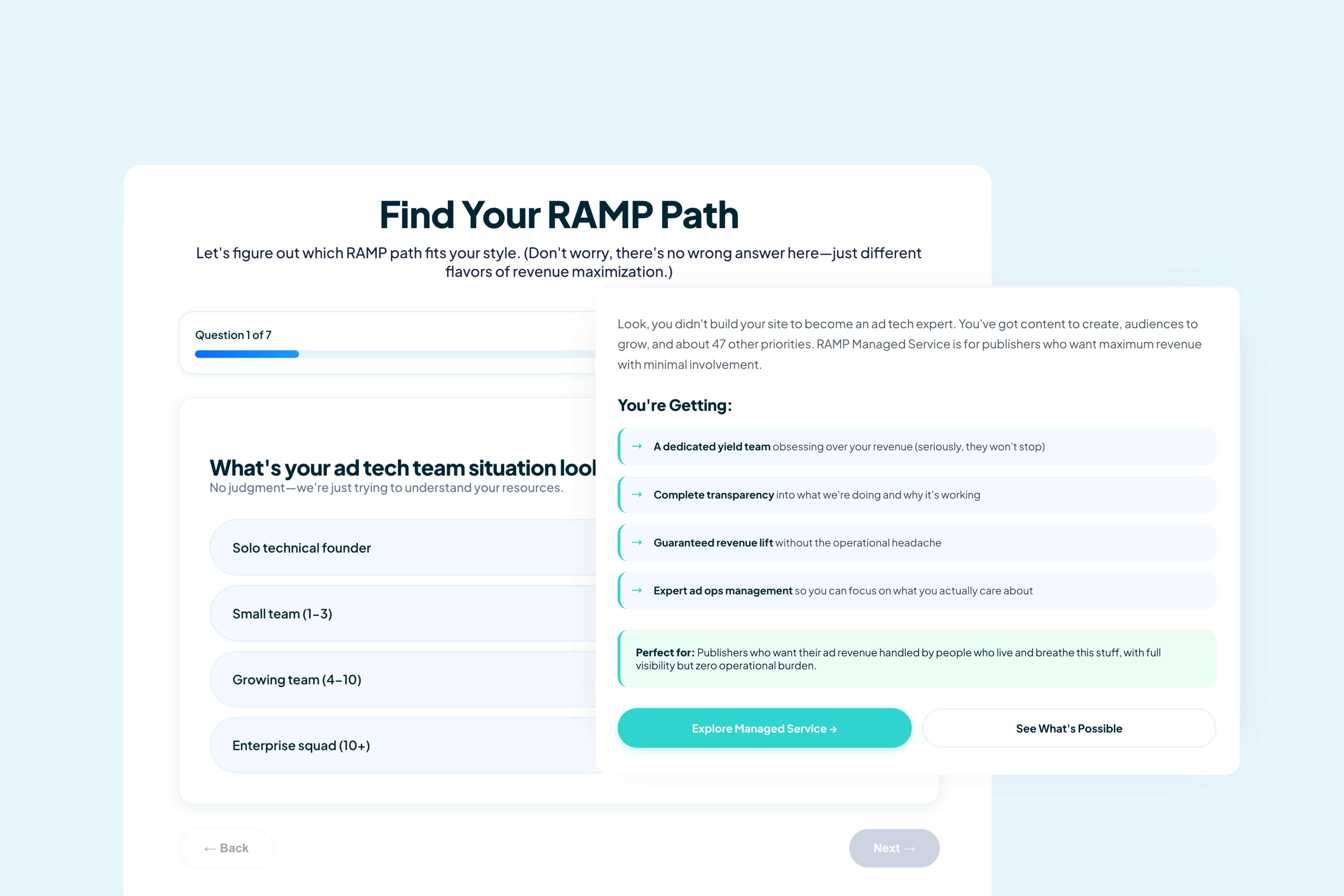
For publishers who prefer hands-off management, the RAMP Managed Service provides expert yield optimization while maintaining full visibility into every setting and decision.
Whether you want the steering wheel or prefer a skilled driver, transparency remains constant. You always see what's happening, why it's happening, and how it affects your revenue.
Ready to stop waiting on engineering and start optimizing your ad strategy? Publishers consistently see measurable improvements when they gain control over their monetization configuration. Apply today to see how visual configuration tools can transform your ad operations.
