
-1.png?width=800&height=157&name=1-playwire-logo-primary-2021%20(1)-1.png)


August 21, 2026

Editorial Policy
All of our content is generated by subject matter experts with years of ad tech experience and structured by writers and educators for ease of use and digestibility. Learn more about our rigorous interview, content production and review process here.
.png?width=900&name=Breaking%20News%20Placeholder%20(1).png)
Key Points
- SPO's original ROI case: agencies built the business case on industry-level waste studies, but campaign-level attribution proving actual client impact was never fully solved.
- The irony of SPO tooling: things like curation platforms, log-level dashboards, and SPO-as-a-service vendors have themselves become a supply chain layer, adding cost while claiming to reduce it.
- What's working: leading trading desks are concentrating optimization effort on three to five supply sources carrying the majority of programmatic spend, not auditing every SSP equally.
- Publisher implication: agencies are tightening their preferred supply lists, and your inventory better earn a place on it.
SPO Fatigue Has Arrived at the Agency QBR
Agency Reporter's analysis of SPO fatigue is a great read. It documents something trading desks have been feeling for about a year: supply path optimization, which started as an effort to eliminate supply chain waste, has become its own category of overhead. Agencies built SPO practices to reduce the layers between advertiser and publisher. Those practices then required curation tools, log-level dashboards, SPO-as-a-service vendors, and transparency consultancies to manage.
The result is that agency finance teams are now asking the same question about SPO that SPO was supposed to ask about the supply chain: show us the how you're saving money or get lost.
Why Campaign-Level ROI Is So Hard to Prove
The original SPO business case was built on industry-wide waste studies. Those studies were credible. Meaningful percentages of programmatic spend were disappearing into unattributed intermediary costs, and the data supported that claim at scale.
Proving SPO's value at the campaign level is a completely different exercise. Demonstrating that a specific supply path change improved a specific client's outcomes, net of the tooling and headcount cost to execute and monitor that change, requires attribution discipline that most agencies never fully built. According to Agency Reporter, even sophisticated trading desks running SPO programs for two or three years are finding that curated private marketplace deals "end up performing statistically indistinguishable from the open exchange inventory" they replaced.
SSP consolidation projects, executed carefully, are yielding single-digit efficiency gains that get partially or fully offset by the licensing cost of the transparency tools used to run them.
Essential Background Reading:
- Supply Path Optimization Resource: Foundational concepts and terminology for understanding SPO in the programmatic supply chain
- Supply Path Optimization Guide: A structured walkthrough of how supply path optimization works and what publishers need to know
- The Expert's Guide to Real-Time Bidding: How RTB auctions work and why auction mechanics underpin every SPO decision
- Publisher Ad Tech Stack: An overview of the technology layers publishers manage and where SPO fits within them
The Structural Irony
SPO was designed as a disintermediation exercise: remove unnecessary layers, bring buyers and sellers closer together, cut waste. In practice, the tooling built to execute that exercise became its own layer.
Curation platforms, SPO-as-a-service vendors, log-level reporting dashboards, and supply chain consultancies now sit between the agency and the media it buys. Each layer charges a fee, and each claims to be the authoritative source on where the waste is accumulating. An agency running a serious SPO program today isn't managing a handful of clean SSP relationships. It's managing a small ecosystem of vendors whose primary job is helping the agency decide which other vendors to trust.
Related Content:
- DSPs Are Coming for the Supply Chain: How DSPs are moving closer to publishers and what that means for your supply chain strategy
- Price Floor Rules: How price floor strategy interacts with supply path decisions and programmatic demand quality
- The Amazon SSP Problem: A structural look at how SSP consolidation trends are creating measurable revenue gaps for publishers
- OpenRTB Resources: Technical reference for the auction protocol that underpins programmatic buying and SPO decisions
What Leading Agencies Are Doing Instead
The agencies holding up best aren't abandoning SPO. They're narrowing its scope with real discipline. A few specific shifts are worth tracking:
- Supply source concentration: trading desks are focusing optimization effort on three to five sources carrying the overwhelming majority of programmatic spend, applying lighter automated review to everything else.
- Open exchange rehabilitation: some agencies are reverting to well-monitored open exchange paths for lower-stakes campaigns, reserving curation budget for high-value CTV or performance work where quality differences are large enough to measure.
- Data infrastructure over path-narrowing: budget is moving away from pure consolidation exercises and toward internal analytics capability. Visibility, not consolidation, is the lever that produces defensible savings.
This is a noticeable shift from "pay someone to do it for me to" to "find a simpler way to do it ourselves and maintain control." At the end of the day, this comes down to trusting the publishers who's inventory ad runs on. Simple as that.
Next Steps:
- The Publisher's Guide to Viewability Optimization: How to build the quality signals agencies now use as selection criteria when consolidating preferred supply lists
- Taking Control of Your News Site Ad Strategy: A technical playbook for publishers who need to tighten their ad stack ahead of agency scrutiny
- Yield Experiment Playbook: How to run structured tests that generate the auditable performance data agencies increasingly demand
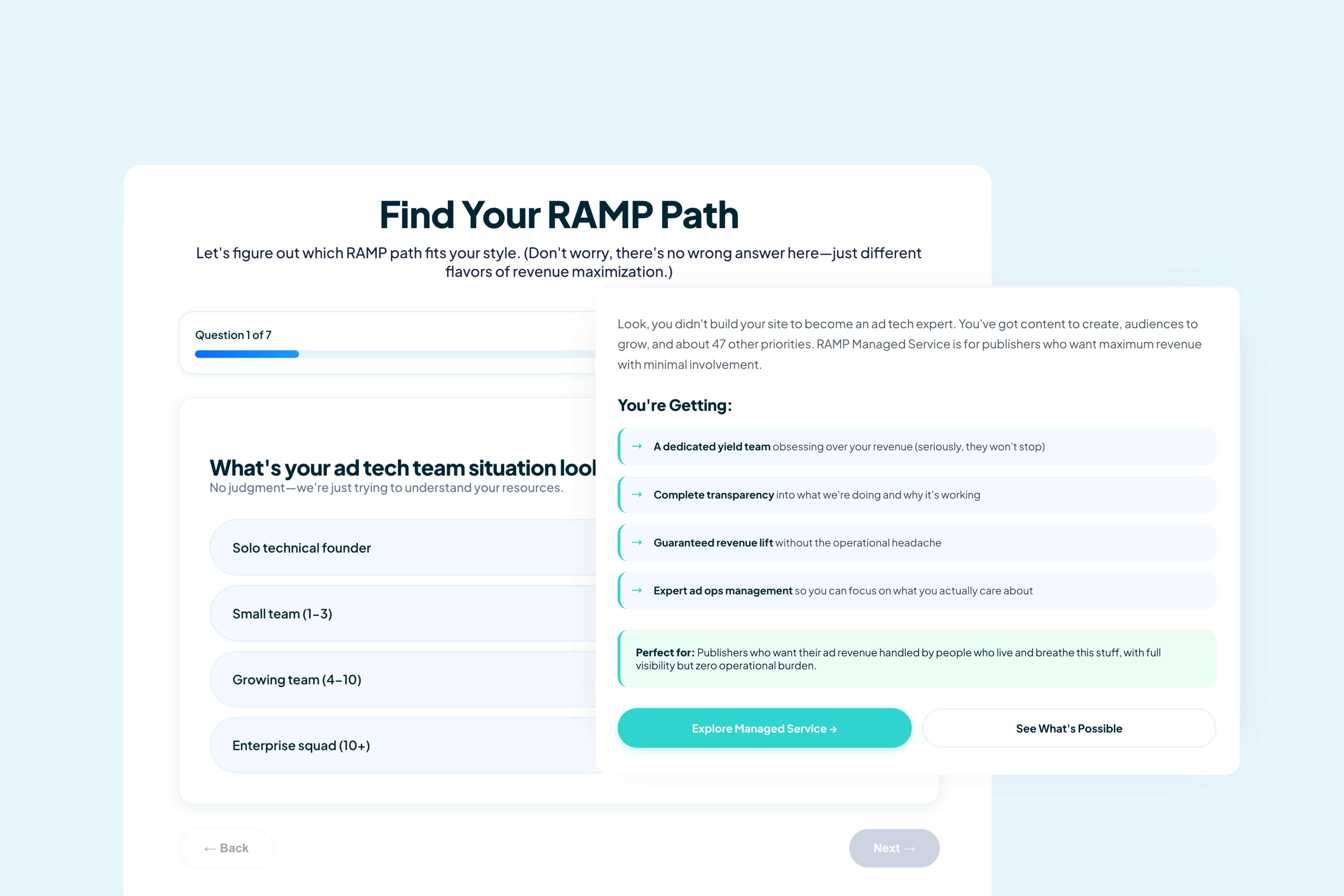
- Self-Service vs. Managed Service Quiz: Determine which operational model best positions your inventory for the consolidated demand environment
What This Means for Publishers
Publishers aren't in the room when agencies restructure their SPO practices, but they're very much affected by the outcome. When agencies narrow their preferred supply lists to three to five sources, inventory that doesn't make that list loses access to the most budget-efficient demand. Retail media networks, CTV, and new identity resolution layers are adding supply chain complexity faster than SPO can address it, according to Agency Reporter's analysis. That complexity keeps creating new places for margin to disappear.
For publishers, the implications are operational and strategic:
- Clean supply paths: if agency trading desks are scrutinizing log-level data independently, the cleanliness of your supply chain is visible. MFA signals, reseller relationships, and fee opacity all show up.
- Viewability and quality benchmarks: agencies concentrating spend are choosing partners with documented quality signals, not just relationships.
- Direct and curated paths: programmatic guaranteed and private marketplace deals with clear performance data are easier to defend in a client QBR than open exchange impressions, even clean ones.
See It In Action:
- Our Publishers Are Partners, Not Just Customers: How Playwire's partnership model delivers the supply chain accountability agencies now require
- Publisher Ad Revenue Maturity Model: Assess where your monetization stack stands against the benchmarks agency trading desks are scrutinizing
- Ads.txt Resources: Practical guidance on maintaining the supply chain hygiene that shows up in agency log-level audits
The Publisher Side of the Transparency Argument
The agencies faring best in this environment share one characteristic: they built measurement discipline alongside the optimization work, rather than treating the optimization itself as the deliverable. That's worth internalizing on the publisher side too.
Our take at Playwire is that transparency isn't a feature. It's a precondition. The RAMP platform gives publishers and their agency partners clean, auditable data at every layer of the stack. We don't add a vendor layer to tell you where your waste is. We eliminate the structure that creates it.
If agency demand is consolidating around supply paths that can prove their value, the publishers positioned to capture that demand are the ones running clean, well-documented inventory through accountable technology. Quality, Performance, Transparency: that's the criteria agencies are now using to build their preferred supply lists.
The SPO recalibration is healthier for publishers who've done the work. For those who haven't, the window is narrowing.
